
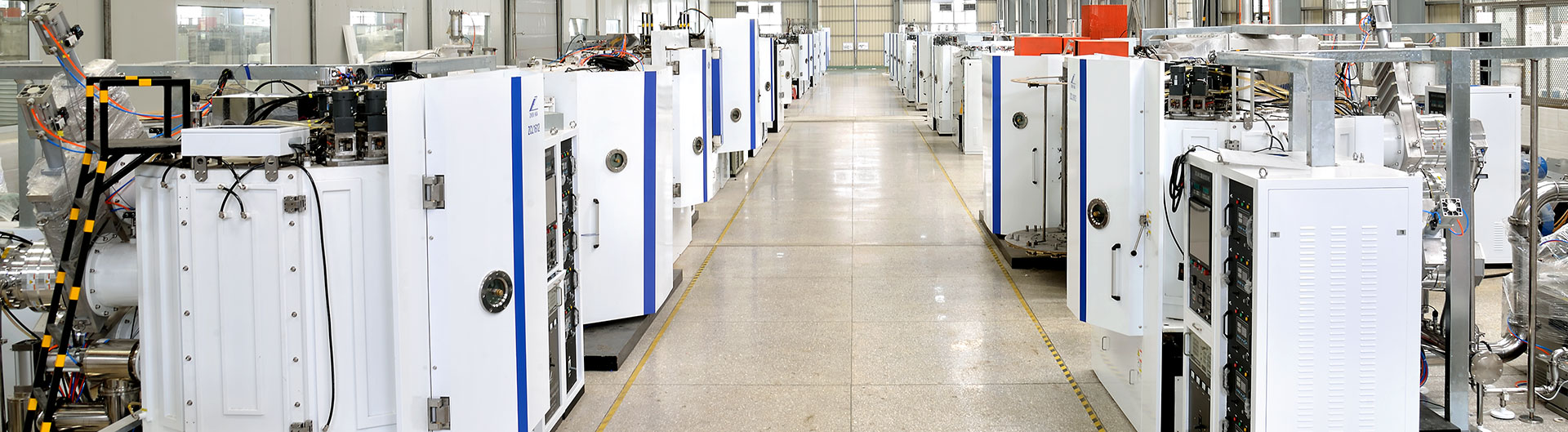
During mechanical PCB drilling, a single micro-drill must continuously penetrate multiple materials, including copper foil, resin, glass fiber and functional fillers. Although the process may appear to involve only repetitive drilling, the cutting edges of the micro-drill are continuously subjected to abrasive wear from hard particles, frictional heat and cyclic mechanical loads.
As PCB manufacturing continues to develop toward higher circuit density, greater layer counts and finer geometries, drilled hole diameters are becoming increasingly smaller. Meanwhile, difficult-to-machine laminates, including high-Tg and high-filler-content materials, are being used more widely. Particularly when the diameter of a micro-drill falls below 0.1 mm, much stricter requirements are placed on drill-point strength, cutting-edge wear resistance, chip evacuation and overall drilling stability.

Once significant wear occurs, the impact extends beyond reduced tool life. It may also lead to increased hole-wall roughness, entry and exit burrs, reduced hole-diameter consistency and even drill breakage.
Therefore, improving the wear resistance of micro-drills and reducing friction through surface coatings is becoming an important technical approach to enhancing PCB drilling quality.
1. Micro-Drill Wear Affects More Than Tool Life
PCB laminates are generally composed of copper foil, resin, glass fiber and various functional fillers. During high-speed drilling, the micro-drill must repeatedly cut through materials with substantially different mechanical and thermal properties. Glass fibers and certain hard fillers continuously cause abrasive wear on the drill point and cutting edges, while resin may adhere to the drill point or helical flutes under the combined effects of friction and cutting heat, adversely affecting subsequent chip evacuation.

As the number of drilled holes increases, the cutting edges of the micro-drill gradually become blunt. The axial thrust required to penetrate the laminate increases accordingly, while friction and heat generation may intensify further. Under these conditions, the cutting action on copper foil, resin and glass fiber gradually deteriorates, resulting in compression, scraping or tearing rather than clean material removal. This may increase hole-wall roughness, produce more pronounced entry and exit burrs and reduce hole-diameter consistency. For fine-line PCBs and high-density interconnect, or HDI, boards, these defects may also increase the difficulty of subsequent hole metallization and quality control.
In addition, the smaller the micro-drill diameter, the more limited the chip-accommodation capacity of its helical flutes. When chips accumulate or resin adheres to the drill point, cutting edges or chip flutes, drilling resistance may fluctuate significantly. When combined with micro-drill wear, spindle runout or unsuitable drilling parameters, the bending and torsional loads acting on the micro-drill may increase, thereby raising the risks of drill deflection and breakage.
2. How Do Micro-Drill Coatings Improve PCB Drilling?
Hard coatings such as ta-C, AlTiN, AlCrN and CrN can be deposited onto PCB micro-drills. Among these materials, tetrahedral amorphous carbon, or ta-C, combines high hardness with a low coefficient of friction, helping reduce cutting-edge wear and drilling resistance while protecting the drill point and cutting edges. In practical applications, micro-drill coatings improve drilling performance mainly by delaying cutting-edge wear, reducing friction and chip-evacuation resistance, and stabilizing hole quality.
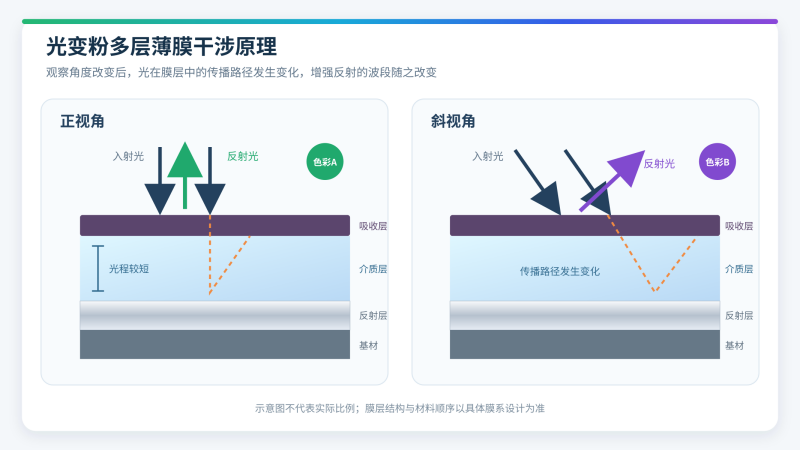
High-hardness coatings reduce the direct contact between glass fibers, hard fillers and the cemented-carbide substrate. This helps slow wear on the drill point, primary cutting edges and margins, allowing the micro-drill to maintain a relatively stable cutting-edge condition over a greater number of drilling cycles.
Low-friction coatings help reduce friction between the micro-drill, PCB laminate and generated chips. They may also reduce the tendency of chips and resin to adhere to the drill point and helical flutes, creating more favorable surface conditions for chip evacuation.
When the wear rate of the cutting edges is effectively controlled, variations in cutting-edge condition during different stages of machining can be reduced. This helps improve hole-wall quality and hole-diameter consistency while limiting the formation of entry and exit burrs.
However, coatings cannot completely eliminate drill breakage. Drill failure is also related to micro-drill diameter, laminate type, stack height, spindle condition and drilling parameters. By slowing wear, reducing friction and improving chip evacuation, a properly engineered coating can reduce abnormal cutting loads and consequently lower the risk of drill breakage.
3. Smaller Micro-Drills Require More Precise Coating Processes
Compared with conventional cutting tools, PCB micro-drills have much smaller dimensions and more delicate drill-point and cutting-edge geometries. Therefore, micro-drill coatings cannot focus solely on achieving high hardness. Film thickness, surface quality and coating-substrate adhesion must also be carefully controlled.
If the coating is too thin, its protection against abrasive wear may be insufficient. If it is too thick, it may alter the microscopic profile of the cutting edge and cause edge rounding or blunting. The smaller the micro-drill diameter, the more sensitive its cutting performance becomes to coating thickness.
Conventional cathodic arc deposition may also generate macroparticles. If these macroparticles are deposited near the drill point, cutting edge or margin, they may increase coating surface roughness and impair cutting-edge sharpness. For ultra-fine micro-drills with diameters below 0.1 mm, particles of the same absolute size can have a much greater relative impact on the cutting geometry.
Micro-drills also contain complex three-dimensional features, including the drill point, cutting edges, margins and helical chip flutes. During batch coating, fixture design, loading density and substrate motion must therefore be comprehensively optimized to achieve adequate coating coverage over different functional areas while maintaining consistency among individual micro-drills.
4. Zhenhua Vacuum PCB Micro-Drill Coating Solution — FMA0605 Hard-Coating System
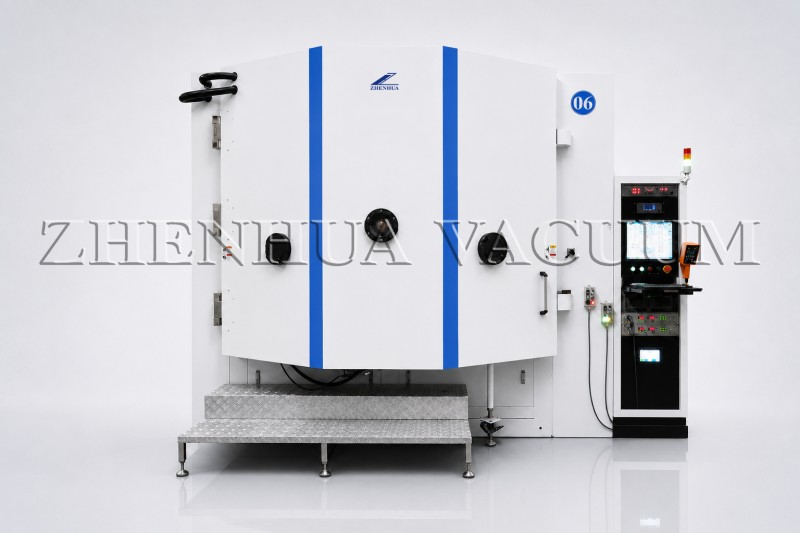
To meet the coating-performance and surface-quality requirements of micro-drills and other precision cutting tools, the Zhenhua Vacuum FMA0605 Hard-Coating System adopts magnetic filtered cathodic arc technology. This technology filters macroparticles generated during cathodic arc deposition, enabling ta-C coatings to achieve both efficient deposition and optimized coating performance.
The ta-C coatings deposited by the system can achieve an average hardness of up to 63 GPa while maintaining low-friction characteristics. The high hardness helps resist abrasive wear caused by glass fibers and hard fillers in PCB laminates. The low coefficient of friction helps reduce resistance between the micro-drill, laminate and chips, while limiting chip adhesion and creating more favorable surface conditions for continuous drilling and chip evacuation.
In addition to ta-C coatings, the system can also deposit high-temperature-resistant and superhard coatings such as AlTiN, AlCrN, TiCrAlN, TiAlSiN and CrN. These coatings have been applied to molds, cutting tools, punches, automotive components, pistons and other wear-resistant products.
5. Conclusion
As PCB drilling continues to advance toward smaller hole diameters and higher machining precision, the value of micro-drill coatings is no longer limited to extending tool life. More importantly, coatings help maintain cutting-edge condition, improve hole quality and enhance stability during continuous drilling. An effective coating solution must comprehensively consider coating hardness, friction performance, film thickness, surface quality and coating-substrate adhesion, while also being matched to the micro-drill specification, PCB laminate type and actual drilling conditions.
Through magnetic filtered cathodic arc technology, the Zhenhua Vacuum FMA0605 Hard-Coating System reduces the adverse effects of arc-generated macroparticles on ultra-fine cutting edges. The high-hardness, low-friction ta-C coatings help delay micro-drill wear, stabilize PCB hole quality and reduce the risk of abnormal drill breakage, providing reliable equipment support for PCB micro-drill coating process development and high-volume production.
-This article was published by vacuum coating equipment manufacturer Zhenhua Vacuum
Post time: Jul-25-2026