
Article source:Zhenhua vacuum
Read:10
Published:26-10-06
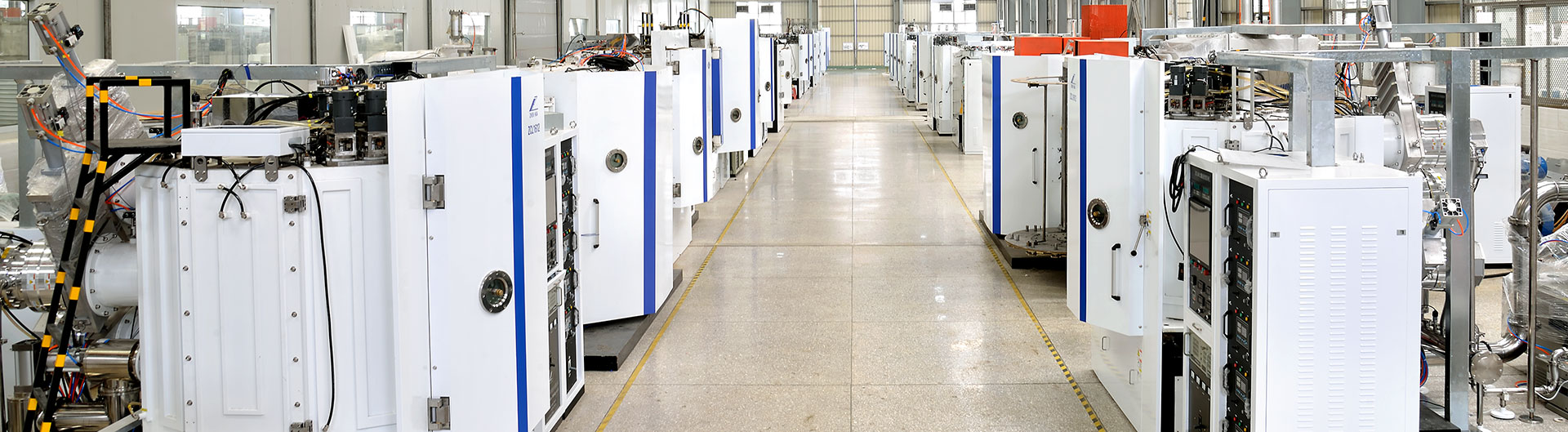
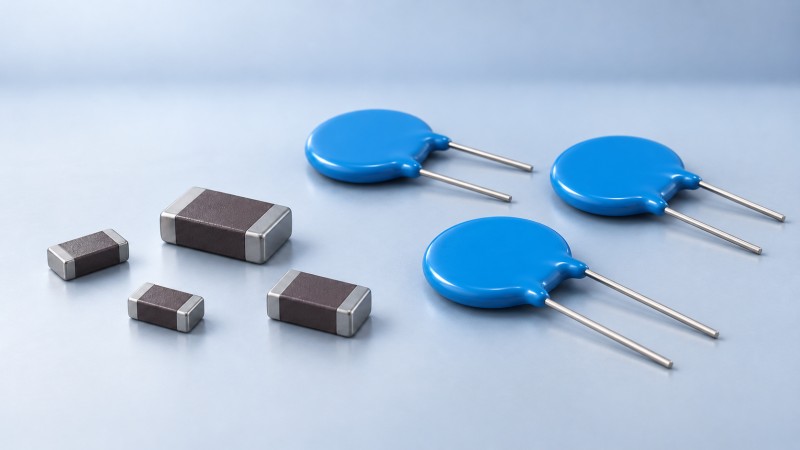
In ceramic capacitor manufacturing, electrodes are traditionally produced through silver paste printing followed by drying and sintering. Because silver paste contains a high proportion of silver and produces relatively thick electrode layers, overall silver consumption is substantial, making fluctuations in silver prices a direct factor affecting electrode material costs.
Over the past two decades, the sustained rise in silver prices has become an unavoidable variable for ceramic capacitor manufacturers. Based on international annual average silver prices, the average silver price was approximately RMB 3,350/kg in 2008, rising to around RMB 9,190/kg in 2025—an increase of approximately 2.7 times over 17 years.
Beyond the high cost of silver, the limitations of the conventional silver paste process have also become increasingly apparent. Printing, drying, and sintering involve multiple process steps, intensive material handling and manual operations. At the same time, increasingly stringent environmental requirements and the demand for automated manufacturing are driving manufacturers to reassess both electrode materials and deposition processes, with a focus on reducing silver consumption, shortening the process chain, and achieving highly automated mass production.
While the industry still widely relied on silver paste processing, Zhenhua Vacuum and its customer had already begun exploring the “copper replacing silver” approach.
In 2008, as the global financial crisis swept across markets and uncertainty increased, a leading domestic manufacturer of high-end ceramic capacitors began evaluating potential long-term impacts from raw material price fluctuations and manufacturing process transformation before rising silver prices had created direct cost pressure.
The customer therefore incorporated electrode process optimization into its long-term manufacturing strategy: reducing dependence on silver and exposure to silver price volatility while maintaining product performance and reliability; and at the same time, transitioning electrode production from manual and semi-manual operations toward automated, standardized mass production to improve product consistency, process stability, and long-term supply capability.
The customer approached Zhenhua Vacuum to jointly explore a new technical route: Could an alternative material be used to produce ceramic capacitor electrodes, while a new deposition process and automated production equipment could enable long-term, stable, high-volume manufacturing?
At the beginning of the project, there was no established solution available. The alternative material needed to provide good electrical conductivity and cost advantages, while also delivering excellent coating adhesion and long-term reliability. The new process also had to be compatible with automated production.
After multiple rounds of technical evaluation, copper emerged as a viable option. Its electrical conductivity is close to that of silver and its material cost is significantly lower. However, copper is prone to oxidation at elevated temperatures, meaning that the conventional silver paste process could not simply be replicated. The deposition method, process parameters, and production equipment all had to be newly developed.
At that time, there were no established domestic examples of mass production of copper electrodes for ceramic capacitors. Materials, process technology, and equipment development all had to start from the ground up. Rather than waiting for the material solution to be finalized, Zhenhua Vacuum became involved from the early stage of the project and worked closely with the customer to establish the technical route. Sample trials, coating verification, and mass-production process development were carried out in parallel with equipment engineering, enabling the deposition process and production line to evolve together.
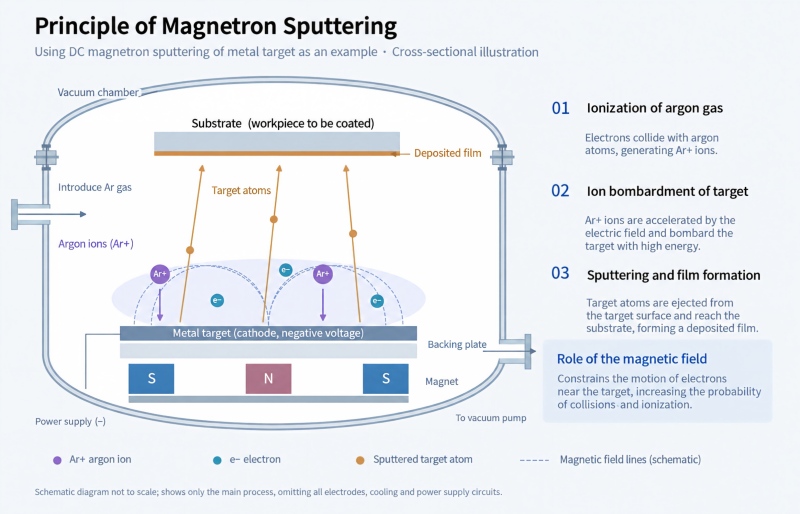
Ultimately, both parties selected magnetron sputtering (PVD) as the core technology. The deposited film provides strong adhesion to the substrate and enables a copper electrode layer to be directly deposited onto the ceramic surface without the organic binder used in silver paste. This eliminates the need for solvents and their associated evaporation, while also removing the high-temperature sintering step, resulting in a cleaner and more environmentally friendly dry process compared with conventional wet processing.
To improve deposition efficiency and production throughput, Zhenhua developed a double-sided continuous sputtering production line. Once the ceramic components enter the vacuum system, both sides can be coated without manual flipping, while continuous material transfer connects the individual process stages. This dry-process solution replaces the multiple wet-process steps of “silver paste printing → drying → sintering,” simplifying the overall process chain while improving batch-to-batch consistency and production efficiency
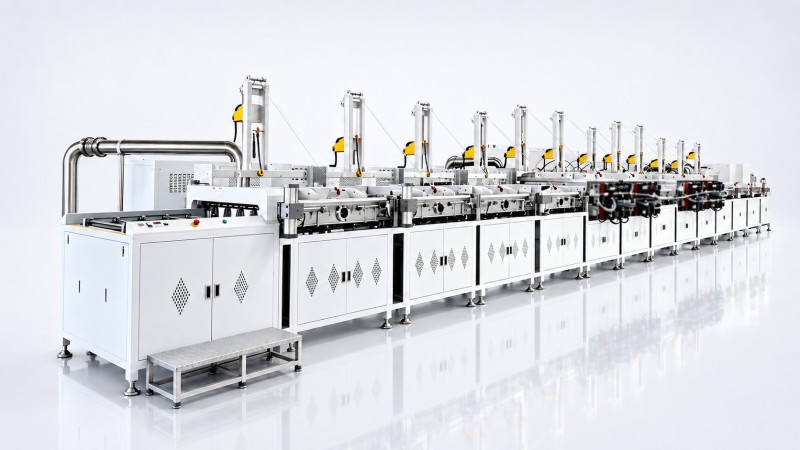
In 2012, the equipment was successfully delivered. From the initial technical discussions and process development to the commissioning and implementation of the production line, the project took approximately two years.
As of September 2026, the double-sided continuous sputtering line delivered in 2012 is still operating at the customer’s facility and supporting stable mass production. While meeting requirements for coating uniformity, process automation, and high-volume manufacturing, the “copper replacing silver” solution significantly reduces dependence on precious-metal silver and lowers electrode material costs, while also aligning with the requirements of cleaner and more environmentally responsible manufacturing. After 14 years of continuous operation, the equipment has provided long-term validation of the process and equipment solution in terms of cost efficiency, coating quality, production reliability, and mass-production stability.
At the time, the domestic industry was still in the early stages of understanding and adopting the copper-electrode route, with most manufacturers continuing to rely on silver paste processing. In recent years, however, increasing cost pressure from silver paste has accelerated the industry’s transition toward “copper replacing silver,” making sputtering equipment an increasingly sought-after solution for ceramic capacitor electrode production. The same technical direction has evolved from an early forward-looking exploration to a major industry focus today—with 14 years of production validation in between.
For the customer, the benefits have been long-term. In addition to directly reducing material costs, the production system eliminated its sensitivity to silver price fluctuations 14 years ahead of much of the industry. The customer also gained an early advantage in environmental compliance and manufacturing automation. While many manufacturers have only in recent years begun facing increasing pressure from silver prices and process transformation, this customer has already maintained stable production with the technology for 14 years.
This project was one of Zhenhua Vacuum’s early applications of double-sided continuous sputtering technology for chip ceramic capacitor manufacturing. Considering the domestic industrial environment in 2012, its successful engineering implementation represented an early breakthrough in the commercialization of copper-electrode technology. It demonstrated Zhenhua Vacuum’s forward-looking approach to process development and technology deployment. Through equipment development, successful delivery, and 14 years of stable mass-production validation, the project established a strong first-mover position for Zhenhua Vacuum in ceramic capacitor coating applications, while providing valuable long-term experience for subsequent equipment development, process optimization, and continuous improvement.