
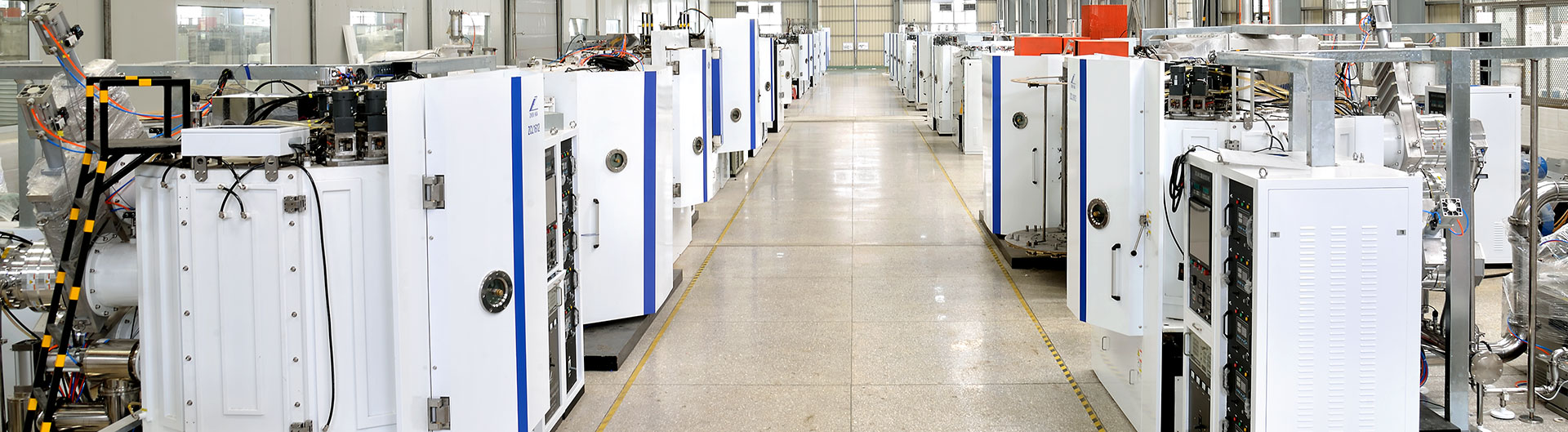
Zhenhua Vacuum ZBM1819 Paint-Free Coating Solution for Automotive Lamps
With the rapid development of LED automotive lighting, intelligent lighting systems, and personalized styling, automotive lamps are integrating an increasing number of lighting and signaling functions. Optical components such as reflectors, lenses, and light guides are also becoming increasingly diverse, placing higher demands on the surface quality and coating uniformity of automotive lighting reflectors.
Injection-molded automotive lighting reflectors typically require aluminum metallization to achieve the desired reflective performance, allowing light to be reflected and distributed according to the optical design. However, aluminum films are relatively thin and susceptible to moisture and corrosive media. Therefore, automotive lighting metallization must not only provide a uniform metallic reflective layer, but also incorporate a protective coating to enhance corrosion resistance and water resistance.
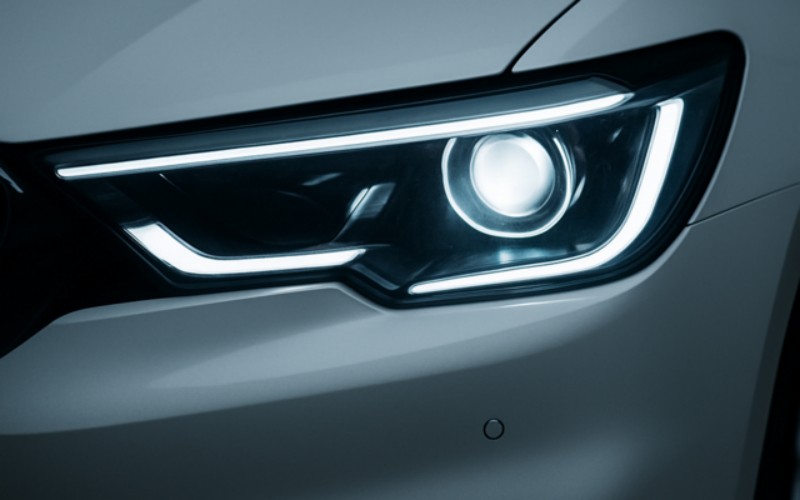
In response to these developments, Zhenhua Vacuum has focused on process integration when optimizing automotive lighting coating processes: while lighting functions and optical components continue to become more sophisticated, the manufacturing process should be simplified as much as possible. How to achieve reflective performance, coating protection, and mass-production efficiency simultaneously has therefore become an important direction for upgrading automotive lighting coating processes.
Traditional Automotive Lighting Coating Involves Multiple Processes, Increasing Mass-Production Management Challenges
Traditional injection-molded automotive lighting components typically undergo multiple processes, including primer spraying, vacuum aluminum metallization, and topcoat spraying for protection. Workpieces need to be loaded, unloaded, and transferred between different pieces of equipment multiple times, which not only extends the production cycle but also increases the risk of secondary contamination from dust, oil, and other contaminants.
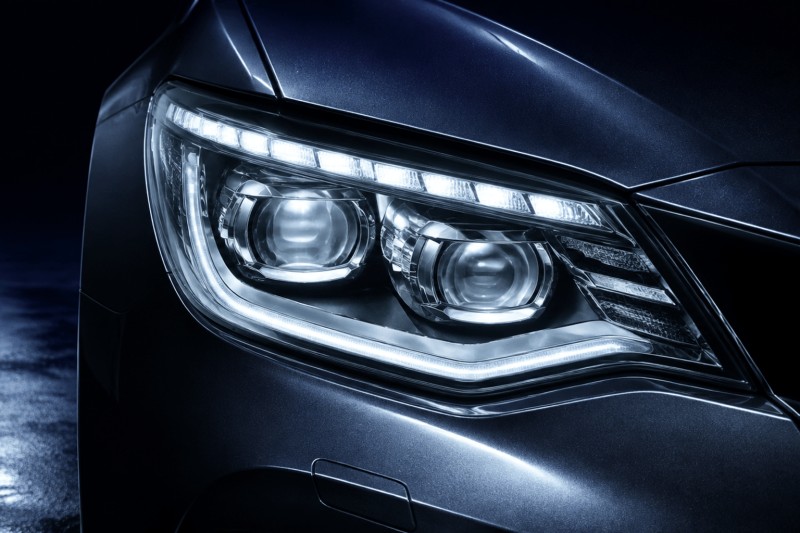
During mass production, fluctuations in materials, process parameters, or the production environment at any stage can affect the appearance, adhesion, and protective performance of the coating, making batch-to-batch consistency more difficult to control. These practical production challenges are also key considerations for Zhenhua Vacuum when developing automotive lighting coating equipment and process solutions.
At the same time, as the industrial coating industry continues to promote the replacement of high-VOC raw materials and auxiliary materials and source reduction of VOC emissions, reducing primer and topcoat spraying has also become an important direction for upgrading automotive lighting manufacturing processes.
Metal Reflective Layer and Protective Coating in a Single Process: Simplifying Automotive Lighting Metallization
To address the long process chain and multiple spraying stages associated with conventional processes, Zhenhua Vacuum has developed the ZBM1819 Automotive Lighting Protective Coating System, providing a paint-free vacuum coating solution for injection-molded automotive lighting components.
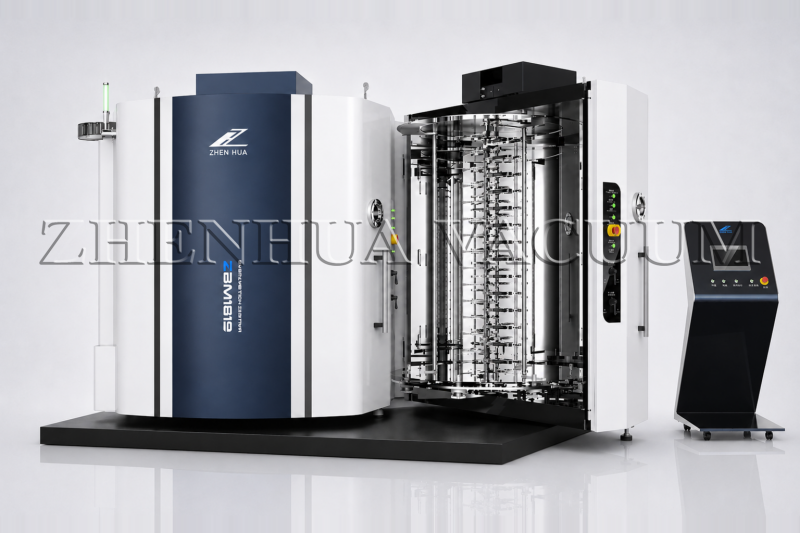
The system can deposit both the metallic reflective layer and protective coating in a single vacuum process, eliminating the need for primer and topcoat spraying. This reduces the risks of contamination associated with repeated loading and unloading, material transfer, and exposure to the surrounding environment, while consolidating multiple conventional processing steps into the vacuum coating process.
Through the integration of equipment and coating processes, the Zhenhua Vacuum ZBM1819 can help automotive lighting manufacturers shorten the overall process chain, reduce investment in spraying equipment and related operations, and decrease coating material consumption and the management burden associated with spraying processes, providing an alternative process route for optimizing overall manufacturing costs.
Multiple Performance Tests Verify the Protective Performance of the Coating
The coating deposited by the ZBM1819 has undergone multiple performance tests:
Adhesion: No coating delamination after direct adhesive tape application; after cross-cut testing, the coating loss area was less than 5%.
Silicone Oil Performance: The line width produced by a water-based marker changed after testing.
Corrosion Resistance: No visible corrosion of the coating after 10 minutes of exposure to 1% NaOH solution.
Water Immersion Test: No coating delamination after immersion in distilled water at 40°C for 24 hours.
Conclusion
For automotive lighting manufacturers, the value of process upgrading is not simply about eliminating a single process step, but about achieving verifiable and repeatable coating quality through a shorter and more integrated process chain. As automotive lighting products continue to evolve, production efficiency, coating quality consistency, and process adaptability will become increasingly important factors in the competitiveness of automotive lighting coating lines. Zhenhua Vacuum will continue to focus on automotive lighting coating applications and provide equipment and process solutions better aligned with the requirements of high-volume production.
-This article was published by vacuum coating equipment manufacturer Zhenhua Vacuum
Post time: Aug-26-2026