
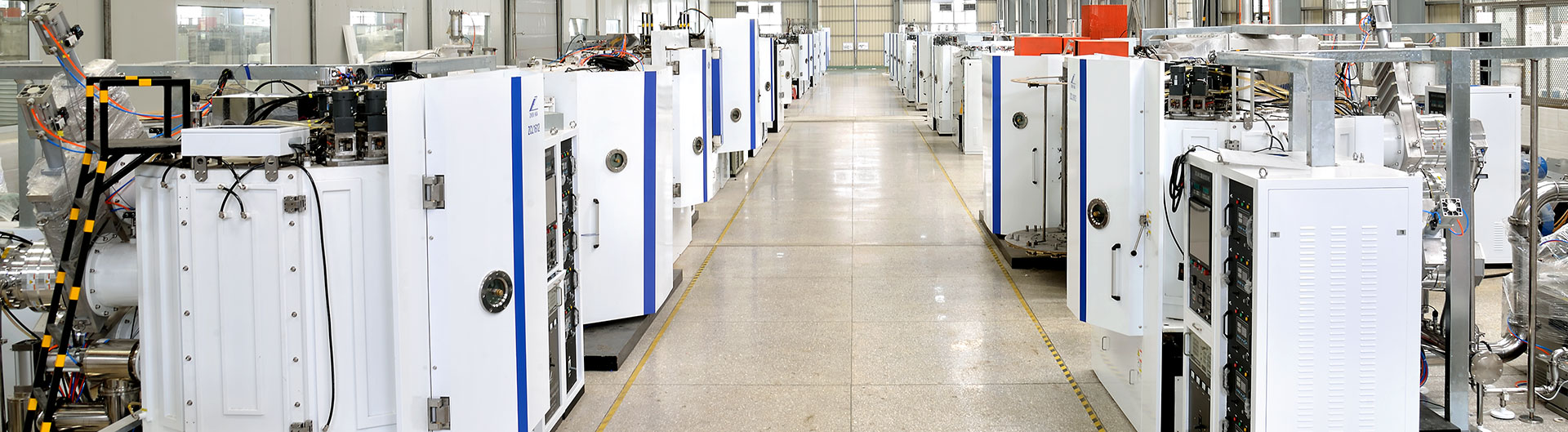
As automotive lighting, intelligent sensing, and cockpit design continue to evolve, coating requirements for products such as headlamp reflectors, interior ambient lighting components, illuminated emblems, radar emblems, and automotive interior trim are becoming increasingly diverse.  Reflectors require metallic coatings to achieve high reflectivity; ambient lighting components and illuminated emblems require precise control of both reflection and light transmission; radar emblems and interior trim must balance appearance, functional performance, and surface protection. For manufacturers, the challenge is no longer simply whether a coating can be deposited, but also how to efficiently switch between coating processes for different products. Diverse Products and Coating Requirements: Limitations of a Single Coating Process Different vacuum coating technologies offer distinct advantages in terms of material compatibility and coating performance. If different coating layers have to be deposited using multiple machines or through separate process stages, this not only increases equipment investment, but also introduces additional handling, process-transfer steps, and the risk of secondary contamination. How to flexibly combine different coating technologies within a single vacuum coating system while maintaining coating quality and production efficiency has therefore become an important requirement for flexible mass production of automotive components. Zhenhua ZCL1417: Integrated Magnetron Sputtering, Evaporation and CVD Coating
 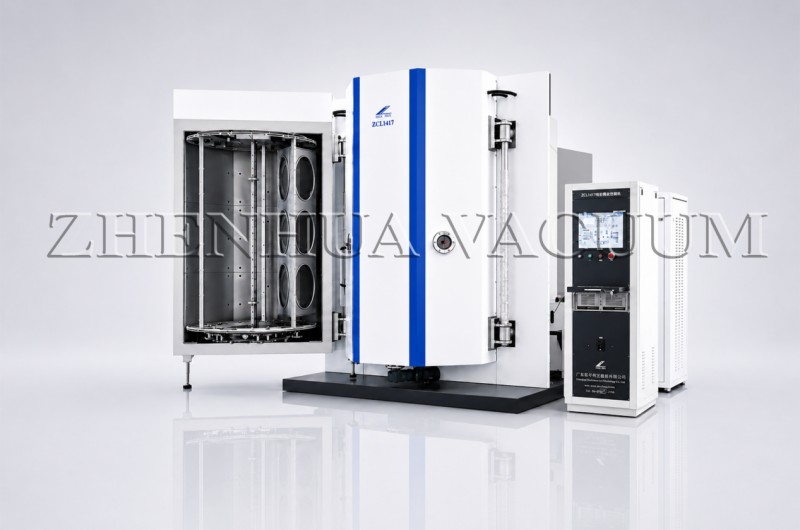 To address the requirements of multi-product and multi-layer coating for automotive components, Zhenhua Vacuum has developed the ZCL1417 vacuum coating system specifically for automotive applications. The system integrates magnetron sputtering, resistance evaporation, and CVD coating technologies, which can be combined and configured according to the substrate material, product structure, and coating-stack requirements, enabling flexible process switching for complex automotive components. Through the integration of multiple deposition technologies, the system can accommodate the deposition of metallic coatings, reactive coatings, semi-transparent coatings, and protective coatings. For components requiring both a metallic coating and a protective coating, the ZCL1417 can complete the corresponding processes within the same vacuum chamber, reducing inter-machine transfer and repeated exposure of the workpieces to ambient conditions, thereby minimizing the risk of secondary contamination during subsequent processing. From Headlamp Reflectors to Radar Emblems: Supporting Flexible Process Switching for Multiple Products The ZCL1417 can be applied to headlamp reflectors, interior ambient lighting components, illuminated emblems, radar emblems, and automotive interior trim. Customers can select the appropriate combination of coating technologies according to the product geometry, specifications, substrate characteristics, and coating-stack requirements, allowing a single coating system to support the production of multiple automotive components.
 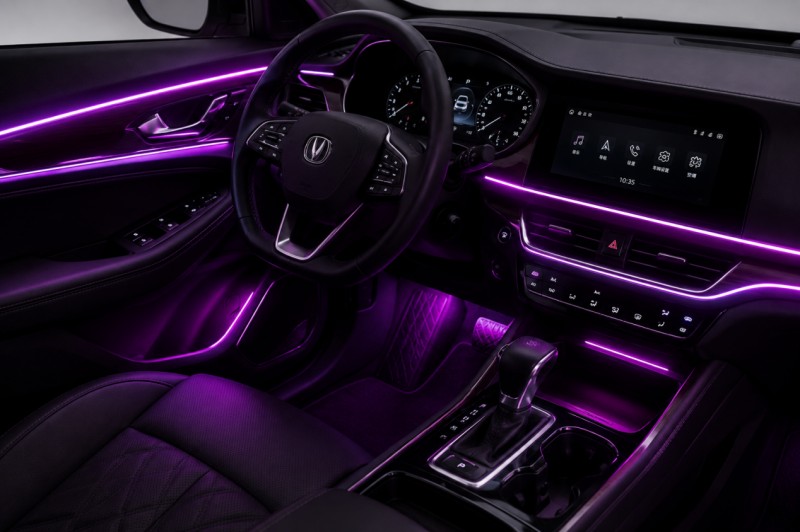 For products such as ambient lighting components and illuminated emblems that require both decorative appearance and controlled light-emitting performance, the ZCL1417 can deposit semi-transparent, semi-reflective coatings. These coatings retain the metallic appearance and reflective characteristics of the surface while allowing a controlled portion of light to transmit through the coating. The high coating uniformity helps minimize localized brightness variations caused by non-uniform deposition, resulting in more consistent reflection and transmission across the product surface. At the same time, the excellent process repeatability helps control coating-performance variations between production batches, meeting the requirements of mass production for consistent appearance and optical performance. To support high-volume production of these automotive components, the system features a compact configuration and fully automated control system. While reducing equipment footprint, it enables centralized management of production processes and coating parameters. The simplified operation helps minimize variations caused by manual intervention and supports efficient process switching and stable production across a wide range of automotive components. Conclusion As coating requirements for automotive components become increasingly diverse, the competitiveness of a coating production line is no longer determined solely by its ability to deposit a specific coating. More importantly, it depends on how quickly the system can adapt to different products while consistently delivering stable and repeatable coating quality. With the integration of multiple vacuum coating technologies, Zhenhua Vacuum ZCL1417 provides automotive component manufacturers with a flexible coating solution that balances process versatility, production efficiency, and coating quality, helping manufacturers address the mass-production requirements of multi-product and multi-coating applications with a more compact production configuration.
-This article was published by vacuum coating equipment manufacturer Zhenhua Vacuum
Post time: Aug-30-2026