
Zhenhua Vacuum Showcases Advanced Coating Solutions atthe CPCA Show Plus 2026, Focusing on PCB Micro-Drill Coating and DPC Ceramic Substrate Metallization
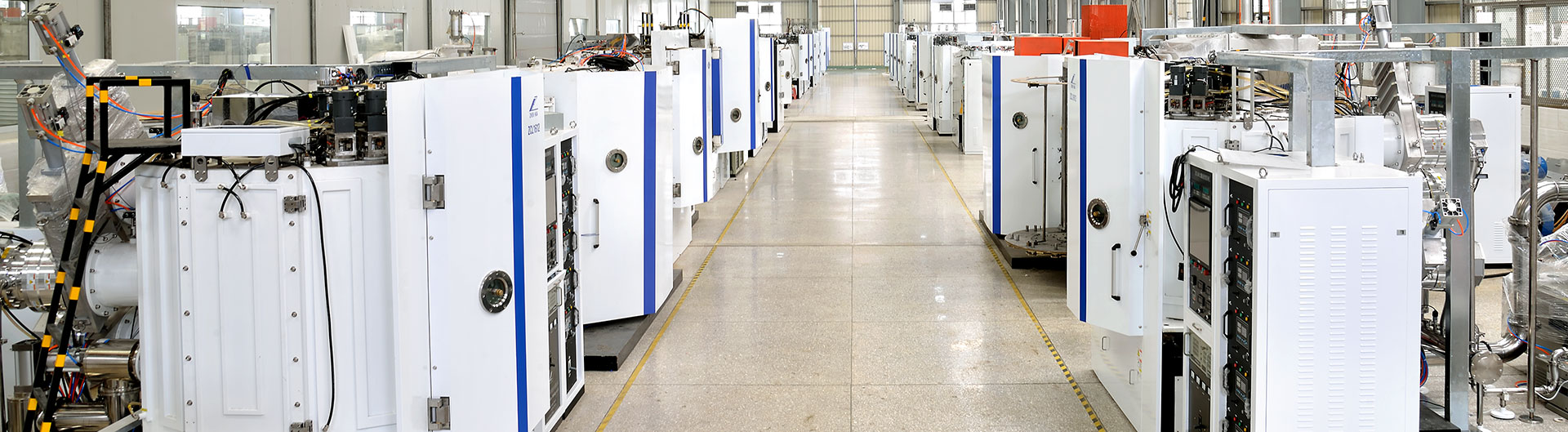
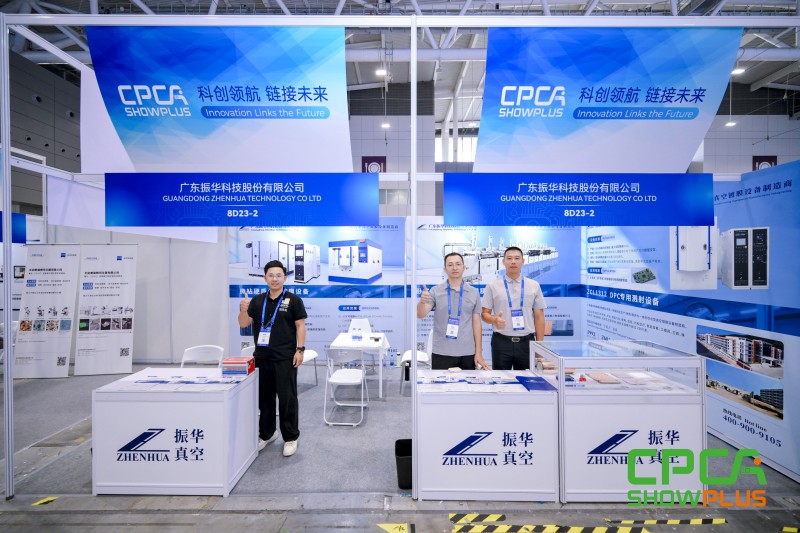
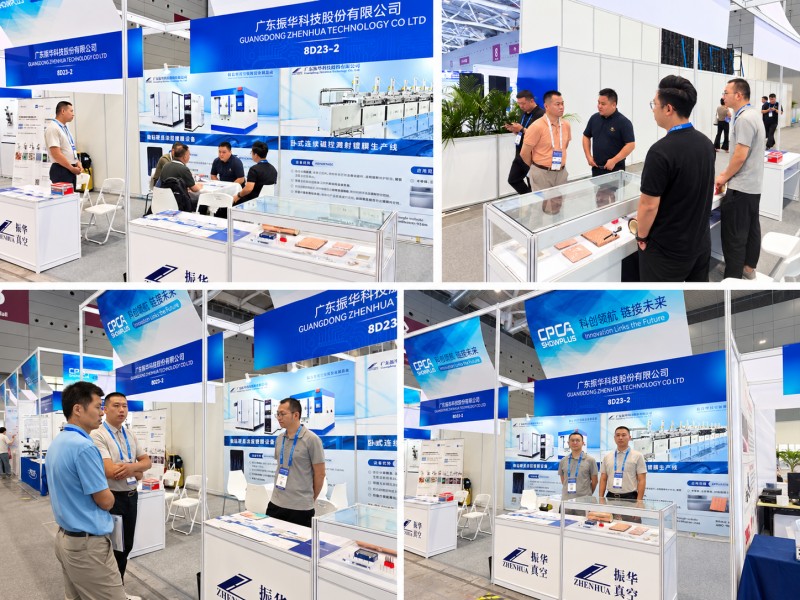
From October 27 to 29, the International Electronics and Circuits Exhibition (Shenzhen) was held in Shenzhen. Guangdong Zhenhua Technology Co., Ltd. (Zhenhua Vacuum) showcased coating solutions for PCB manufacturing and ceramic substrate metallization, including PCB micro-drill coating equipment and a horizontal continuous magnetron sputtering coating production line.
The exhibition highlighted the application value of vacuum coating technologies in advanced electronics and circuit manufacturing. Over the past two years, Zhenhua Vacuum has delivered more than 300 PCB micro-drill coating systems, demonstrating the equipment’s reliability and operational stability through extensive customer applications and continuous batch deliveries.
At this exhibition, Zhenhua Vacuum focused on how vacuum coating technologies can be closely integrated with specific manufacturing requirements, providing customers with technical support for process optimization and manufacturing upgrades.
Micro-Drill Coating for High-Performance PCB Manufacturing
The rapid development of AI servers, advanced HDI (High-Density Interconnect) PCBs, and other high-end electronic applications is placing increasingly stringent demands on PCB drilling quality and process stability.
With different PCB material systems, micro-drills must maintain high wear resistance at the cutting edges and efficient chip evacuation during continuous drilling. Progressive tool wear, combined with increased chip evacuation resistance, can affect hole-wall quality and tool life, while also increasing the risk of premature drill breakage.
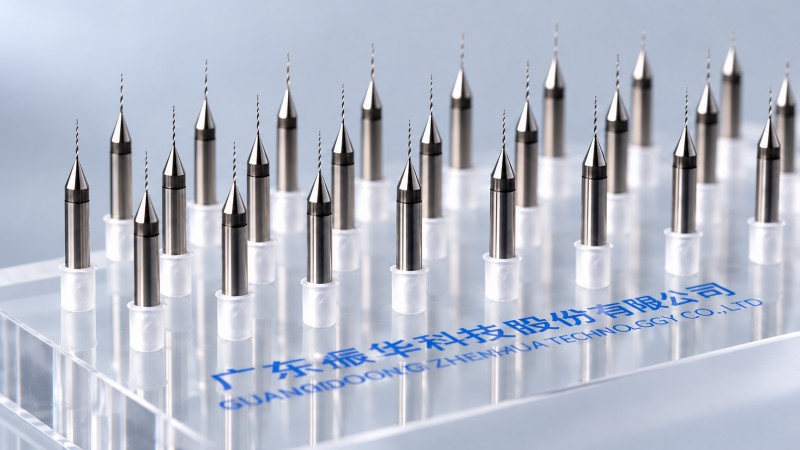
Coating is an important approach to enhancing micro-drill performance. By improving surface wear resistance and reducing friction, a functional coating can protect the cutting edges and optimize the tribological interaction between the tool and workpiece material.
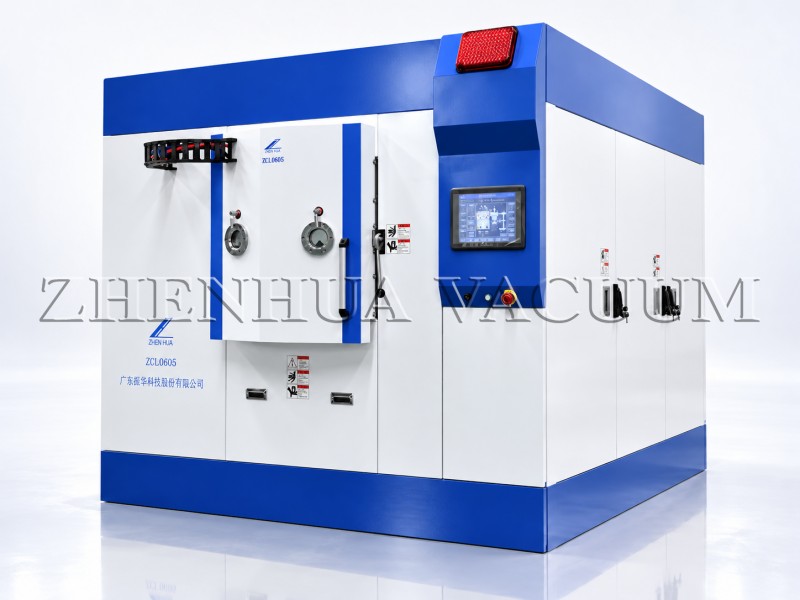
The Zhenhua Vacuum MFA0605 PCB Micro-Drill Coating System adopts cathodic arc plasma source technology with magnetic filtration, enabling the deposition of functional coatings such as ta-C (tetrahedral amorphous carbon).
The bent-pipe magnetic filter helps suppress the impact of macroparticles generated during cathodic arc evaporation, contributing to improved coating surface quality. This enables micro-drills to achieve a balance between wear resistance, low friction and surface finish.
By optimizing the coating process according to drill geometry, PCB substrate materials and cutting conditions, the coating performance can be effectively translated into improved drilling performance and practical manufacturing benefits.
Ceramic Substrate Metallization: Establishing a Conductive Base for Subsequent Electroplating
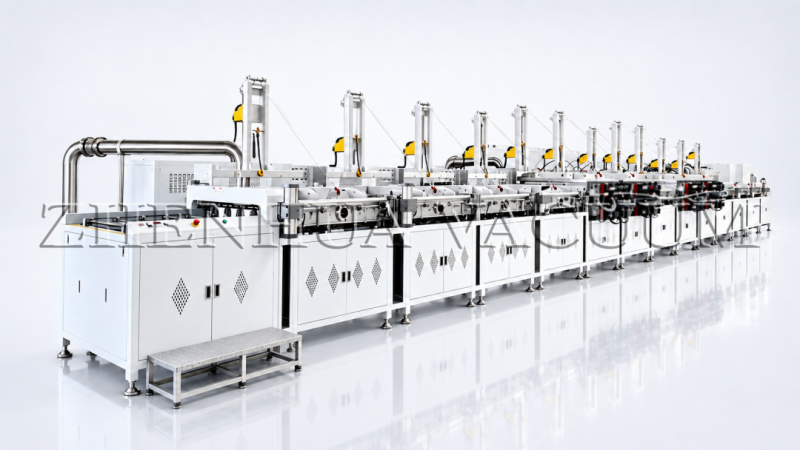
In ceramic substrate manufacturing, Zhenhua Vacuum’s horizontal continuous magnetron sputtering coating production line is designed for the metallization of DPC (Direct Plated Copper) ceramic substrates, providing process solutions for applications including high-power LEDs, laser devices, power modules and semiconductor thermoelectric coolers.
For DPC ceramic substrate metallization, the objective is not only to establish electrical conductivity on the ceramic surface, but also to achieve strong adhesion between the deposited metal film and the ceramic substrate, providing a reliable foundation for subsequent electroplating and fine-line circuit fabrication.
For substrates with microvias, the deposited film must also penetrate into the vias and form a continuous conductive seed layer, placing higher demands on the step coverage and conformality of the deposition process.
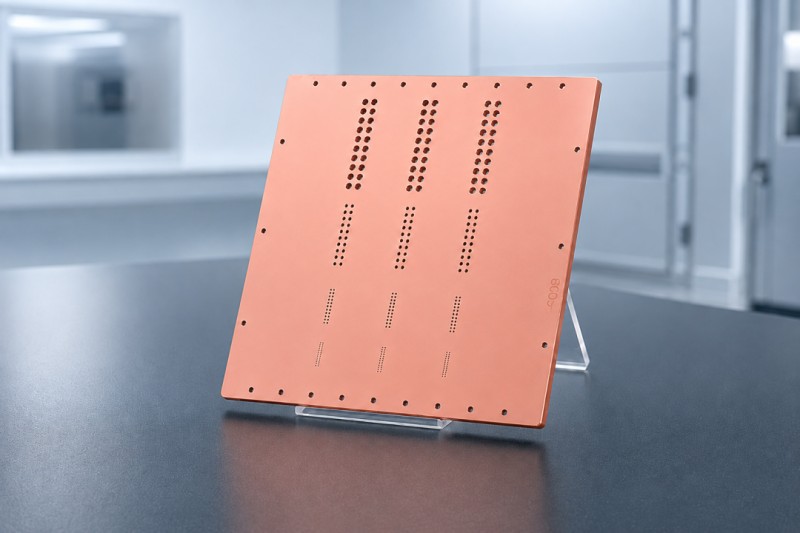
To address these requirements, Zhenhua Vacuum’s horizontal continuous magnetron sputtering production line first deposits a titanium (Ti) adhesion/transition layer to enhance the interfacial bonding between the ceramic substrate and the metal film, followed by copper (Cu) deposition to establish the conductive pathway and provide a suitable seed layer for subsequent electroplating.
For microvia metallization, Zhenhua Vacuum’s current process capability supports a minimum via diameter of 60 μm and a maximum via depth of 380 μm. The deposition process can be further optimized according to the specific substrate structure, providing metallization solutions for both ceramic surfaces and microvias.
Conclusion
At the exhibition, Zhenhua Vacuum presented vacuum coating solutions for PCB micro-drill coating and DPC ceramic substrate metallization, with technical discussions centered on the manufacturing challenges that customers care most about—including coating quality, production efficiency and process adaptability.
As electronic and circuit products continue to evolve toward higher density, higher performance and greater functional integration, vacuum coating technologies need to be more closely integrated with material characteristics, product structures and production-line requirements.
Taking this exhibition as an opportunity, Zhenhua Vacuum will continue to deepen technical collaboration with customers across the electronics manufacturing supply chain. By focusing on specific application requirements, Zhenhua will further advance process development, sample validation and equipment optimization, while continuously improving equipment delivery and technical support services.
Through this approach, Zhenhua Vacuum aims to help customers move from application-specific coating requirements to stable, repeatable mass production, supporting product upgrades and improvements in manufacturing efficiency.
Post time: Oct-30-2026