
With increasingly stringent environmental regulations, the use of waterborne coatings in the automotive industry has been rising year by year. However, insufficient adhesion between waterborne paint and polymeric substrates remains one of the key process challenges for OEMs and automotive component suppliers.
1. The Root Cause of Poor Adhesion: The Naturally “Water-Repellent” Surface of Plastics
Waterborne coatings use water as the main solvent. Compared with solvent-based coatings, they require higher surface wettability of the substrate.
However, common automotive interior and functional plastic materials, such as polypropylene (PP), ABS, and polyurethane (PU), naturally have low surface energy and poor hydrophilicity. As a result, waterborne paint finds it difficult to spread, wet, and anchor effectively during the coating process.
This material property difference can directly lead to:
1. Poor paint film adhesion, with a higher failure rate in cross-hatch adhesion tests;
2. Blistering, peeling, and other durability issues during long-term use;
3. Increased rework rate, higher manufacturing costs, and disrupted production schedules.
Many companies first try to adjust the paint formulation or add a primer process. However, this is often only a temporary fix. The real problem lies in the physical and chemical properties of the plastic surface itself, rather than the coating system.
2. Zhenhua Vacuum’s Waterborne Coating Adhesion Solution: Solving the Bonding Problem Between Waterborne Paint and Plastic Parts
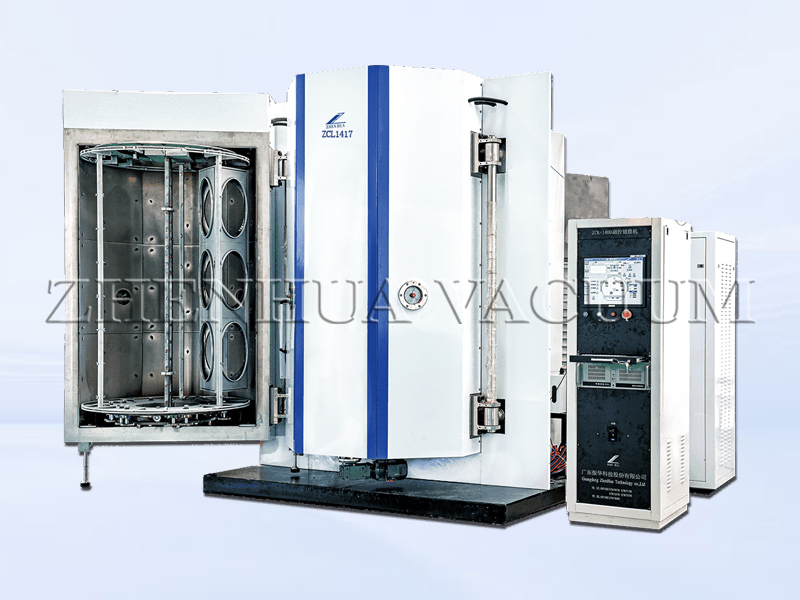
To fundamentally improve the bonding strength between waterborne coatings and polymer materials, targeted surface modification pretreatment is required before the spraying process. This enables the plastic surface to obtain hydrophilic properties that better match waterborne coatings.
To address this process bottleneck, Zhenhua Vacuum has developed a dedicated pretreatment solution for waterborne coating applications, with surface modification as the core technical approach.
Through controlled modification of the plastic surface, this solution significantly improves surface energy and surface polarity without changing the bulk structure of the substrate. As a result, it fundamentally enhances the wettability and adhesion of waterborne coatings at the interface layer.
1. Significantly Improved Adhesion
After surface modification treatment, the adhesion level of waterborne paint on plastic parts can stably meet the relevant coating standards of automotive OEMs, effectively reducing the failure rate in cross-hatch adhesion tests.
2. Optimized Weather Resistance and Barrier Performance
While improving adhesion, the modification treatment also enhances the barrier performance of the coating system. It helps resist environmental factors such as humidity, heat, and UV exposure, thereby extending the service life of automotive interior and functional components.
3. Full Coverage for Complex-Shaped Parts
Automotive interior parts and airbag-related components often have complex structures, including curved surfaces, grooves, and irregular cross-sections.
Zhenhua Vacuum’s equipment allows flexible adjustment of process parameters and customized configuration based on different workpiece geometries, ensuring uniform treatment and avoiding untreated blind spots.
Conclusion
The transition to waterborne coating processes is a long-term trend in automotive painting. Adhesion improvement is a technical barrier that cannot be avoided in this transformation.
Zhenhua Vacuum understands that every process step directly affects vehicle quality and the end-user experience. That is why Zhenhua Vacuum always takes process reliability and production-line feasibility as the core standards of product development, continuously providing high-quality solutions for the industry.
— Published by a professional vacuum coating equipment manufacturer Zhenhua Vacuum
Post time: Jun-04-2026