
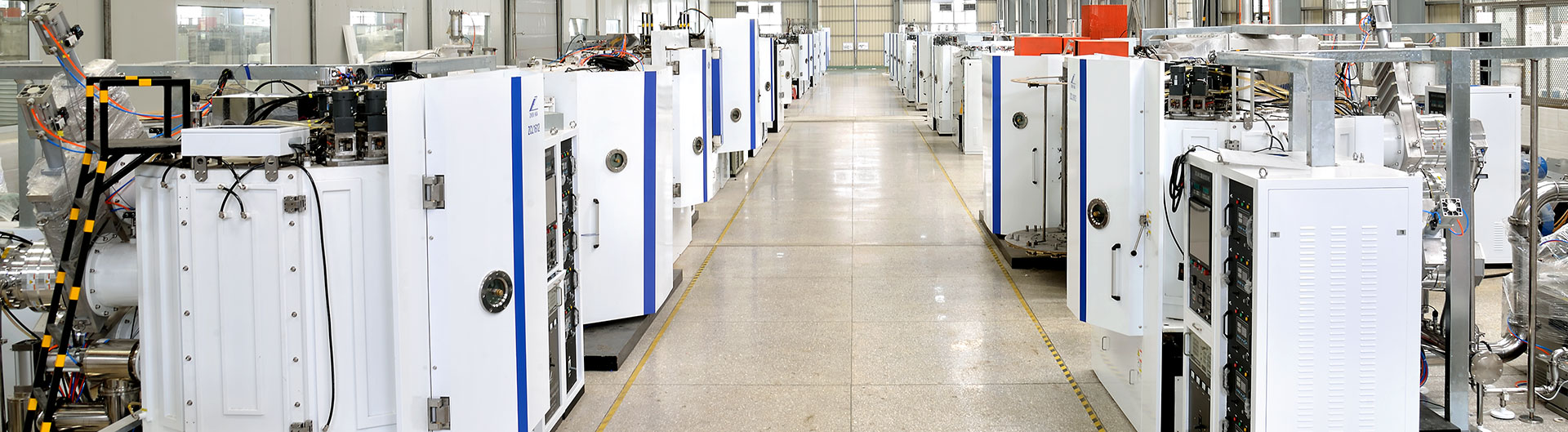
As the automotive industry advances into a new era of intelligence, lightweight design, and high performance, vacuum coating technology has become increasingly prevalent in automotive manufacturing. It serves as a critical process for enhancing product quality, optimizing aesthetics, and improving functionality. Whether applied to headlights, interior trims, exterior decorative components, or emerging smart cockpits and functional glass, vacuum coating plays an indispensable role.

Introduction to Vacuum Coating Technology
Vacuum coating is a thin-film deposition technique performed in a vacuum environment, utilizing physical vapor deposition (PVD) or chemical vapor deposition (CVD) methods to deposit materials onto substrate surfaces. Compared to traditional spray painting or electroplating, vacuum coating offers significant advantages, including environmental friendliness, superior film adhesion, excellent corrosion resistance, and broad applicability.
Applications in Exterior Components
In automotive interior applications, vacuum coating is widely used for decorative coatings on logos, door handles, center console panels, buttons, knobs, and air vents. By depositing metallic-finish layers—such as aluminum (Al), chromium (Cr), titanium (Ti), or colored coatings—onto plastic substrates, vacuum coating enhances the premium metallic appearance of interior parts while improving weather resistance and wear resistance, thereby extending service life.
Headlight Coating: Balancing Functionality and Aesthetics
Modern automotive lighting demands increasingly high optical performance and decorative effects. Vacuum coating technology enables the deposition of reflective films, semi-transparent films, and even color-shifting films on lens covers or reflector cups, achieving precise light control while maintaining design appeal. For example, aluminum coatings are commonly used for reflector films, while colored or matte coatings are employed for customized, high-tech aesthetics.
Emerging Demand in Smart Cockpits and Optical Glass
With the rise of smart cockpits, components such as head-up displays (HUDs), large touchscreens, and electronic rearview mirrors are becoming standard. These modules rely on large-area optical glass, PMMA, or PC substrates, which require high-uniformity, high-adhesion vacuum coatings. PVD techniques like magnetron sputtering can provide anti-glare, anti-fingerprint, and high-transmittance multi-functional films, ensuring optimal performance for intelligent driving systems.
Advantages in Energy Efficiency and Environmental Protection
Amid global trends toward carbon neutrality and green manufacturing, automotive vacuum coating machine are increasingly replacing traditional spraying and electroplating due to their zero wastewater/gas/solid emissions, precise film controllability, and high material utilization efficiency. This shift positions vacuum coating as the preferred surface treatment technology for automotive manufacturers.
Conclusion
From aesthetic enhancements to functional implementations, and from traditional components to smart automotive systems, vacuum coating continues to expand its applications in the automotive sector. With ongoing advancements in equipment technology and process optimization, vacuum coating is poised to play an even more critical role in new energy vehicles and connected autonomous vehicles.
–This article is released by vacuum coating machine manufacturer Zhenhua Vacuum.
Post time: Jun-11-2025