
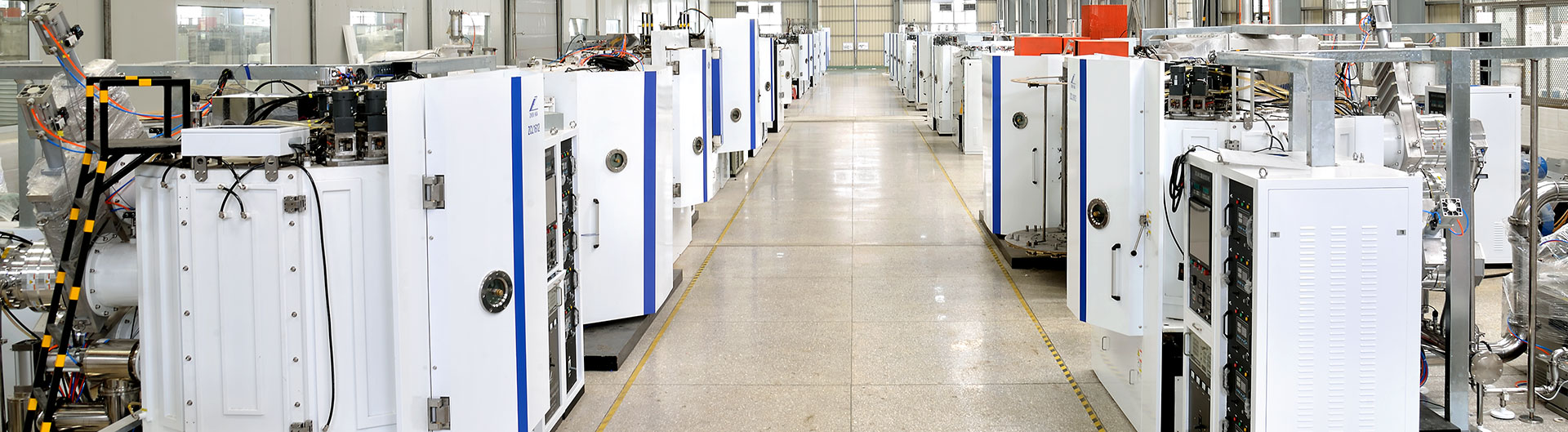
Vacuum coating technology is widely recognized for its environmental friendliness, high efficiency, excellent film uniformity, and superior film density. In industrial applications, vacuum coating equipment is generally classified into two main categories: Physical Vapor Deposition (PVD) and Chemical Vapor Deposition (CVD).
Physical Vapor Deposition (PVD) systems include evaporation, sputtering, and ion plating technologies. Evaporation coating systems utilize various heating methods to vaporize coating materials, such as resistance heating evaporation, electron beam evaporation (E-beam), induction heating evaporation, and arc evaporation. Sputtering coating systems, on the other hand, rely on plasma-induced target atom ejection and include direct current (DC) sputtering, radio frequency (RF) sputtering, magnetron sputtering, and reactive sputtering processes. Ion plating systems combine plasma and evaporation or sputtering mechanisms to enhance film adhesion and density, with typical technologies including cathodic arc ion plating, magnetron sputtering ion plating, and hollow cathode ion plating.
Chemical Vapor Deposition (CVD) systems involve chemical reactions of gaseous precursors to form solid thin films on substrate surfaces. Common CVD technologies include Atmospheric Pressure Chemical Vapor Deposition (APCVD), Low Pressure Chemical Vapor Deposition (LPCVD), Plasma Enhanced Chemical Vapor Deposition (PECVD), Metal-Organic Chemical Vapor Deposition (MOCVD), and Atomic Layer Deposition (ALD), each suited to different material systems and process requirements.
Vacuum coating technologies are extensively applied across a wide range of industries, including automotive manufacturing, electronics and consumer electronics (such as smartphones), semiconductors, home appliances, sanitary ware, daily chemical products, decorative components, and flexible film materials.
-This article was published by vacuum coating equipment manufacturer Zhenhua Vacuum
Post time: Apr-02-2026