
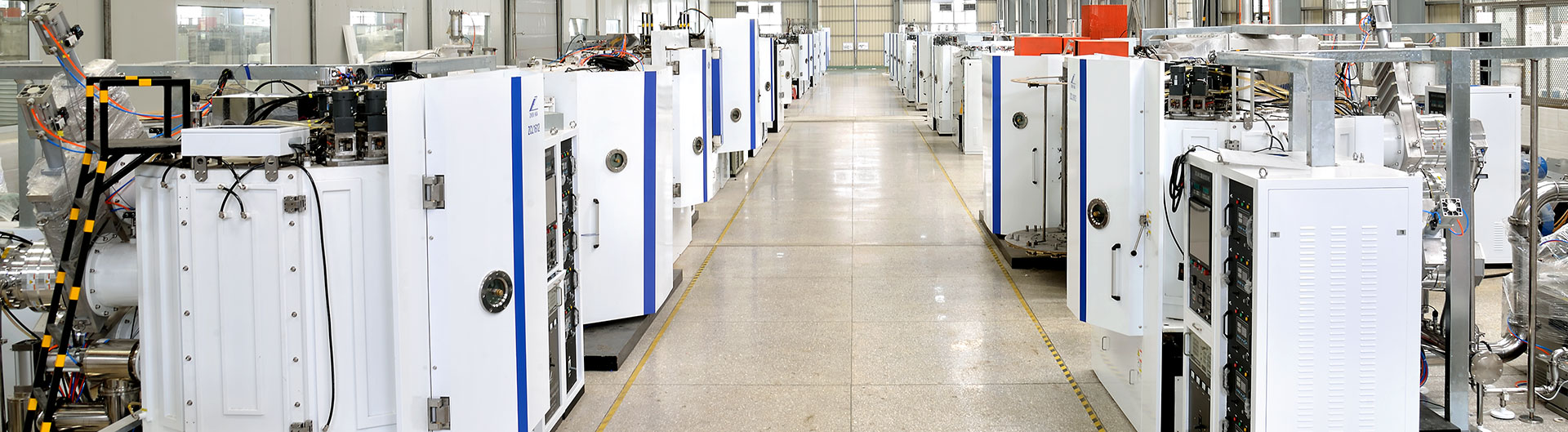
In a Vacuum Coating System, the Cooling System is an indispensable auxiliary unit. Whether in Thermal Evaporation, Magnetron Sputtering, or CVD processes, the target, substrate, and chamber components are subjected to intense heating under high-energy beam bombardment. Without efficient thermal management, not only does film quality deteriorate, but equipment damage and production interruptions can also occur.
I. Why Do Vacuum Coating Systems Require Cooling?
During coating processes, the main sources of heat include:
Target Bombardment: In magnetron sputtering, ion bombardment of the target generates a significant amount of heat.
Plasma Heating: Energy released during plasma discharge leads to localized heating inside the chamber.
Substrate Heating: Energy transferred to the workpiece during film deposition causes thermal expansion or surface deformation.
Pump & Power Losses: High-power pumps and power supplies generate additional heat loads.
If heat is not dissipated in time, it can lead to:
Porous film growth, reduced film density.
Substrate deformation and loss of dimensional precision.
Abnormal target erosion, accelerating “burning” of the target.
Seal degradation inside the chamber, compromising vacuum stability.
II. Working Principle of Cooling Systems
Vacuum coating systems typically employ closed-loop water cooling, while some high-precision equipment also integrates oil cooling or cryogenic traps. The fundamental mechanisms include:
Conduction: Heat is transferred through the target backing plate, substrate holder, and cooling jackets.
Convection: Circulating coolant removes heat from heated components.
Heat Exchange: Plate heat exchangers or cooling towers transfer thermal load to the external environment, ensuring continuous temperature control.
III. Key Roles of the Cooling System
Maintaining Film Quality
Stable temperature prevents abnormal crystallization and optical drift, ensuring film uniformity and strong adhesion.
Extending Equipment Lifetime
Protects vacuum chambers, magnetron targets, and seals from thermal damage.
Ensuring Process Repeatability
Stable cooling is essential for batch-to-batch consistency.
Supporting High-Power Processes
For large-area magnetron sputtering or long-duration CVD processes, cooling is the foundation for uninterrupted production.
IV. Maintenance Essentials
Water Quality Management: Use deionized water (DI water) to prevent scale buildup and ionic contamination.
Flow & Pressure Monitoring: Ensure adequate cooling efficiency at targets and substrate fixtures.
Heat Exchanger Cleaning: Maintain cooling performance by preventing particle blockage.
Temperature Control Integration: Link with PLC systems for over-temperature alarms and automatic shutdown protection.
Conclusion
In vacuum coating equipment, the cooling system is not a peripheral accessory but a core safeguard for process stability, product yield, and equipment longevity. Only through robust cooling design and standardized maintenance can high-energy deposition processes operate under controlled temperatures, consistently delivering high-quality thin films.
—This article was published by vacuum coating equipment manufacturer Zhenhua Vacuum
Post time: Sep-10-2025