
With the accelerated advancement of automotive intelligence and electrification, automotive lights are no longer limited to a single illumination function, but have evolved into important carriers integrating appearance recognition, interactive expression, and intelligent perception, leading to a simultaneous increase in their value and manufacturing requirements.
The improved functionality and appearance requirements of automotive lights also place higher demands on surface treatment processes. In the past, spray painting technology, with its mature and stable characteristics, has long been used in the manufacturing of automotive lighting components. Faced with environmental pressures, cumbersome processes, and high overall costs associated with production, automotive lighting manufacturers can no longer limit their process upgrades to improvements in the single spray painting stage. Reducing reliance on spray painting processes, shortening workflows, and lowering overall costs are more practical upgrade directions.
ZPMC Vacuum ZBM1819: A Green Protective Film Solution for Automotive Lighting Manufacturing
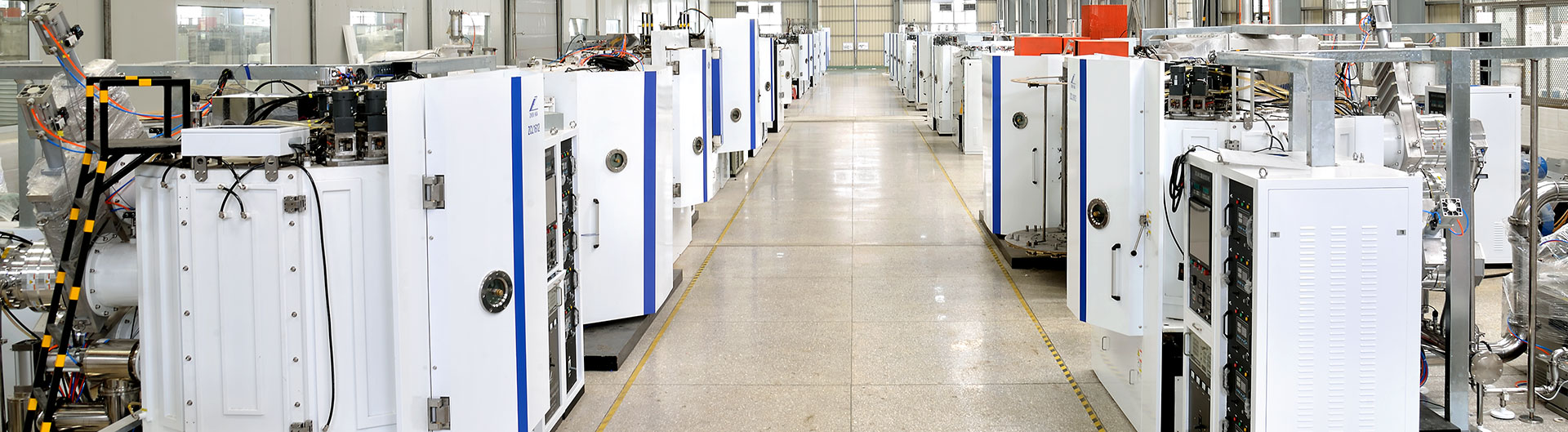
ZPMC Vacuum’s ZBM1819 automotive lighting protective film equipment was launched precisely to address this need. Under suitable material conditions, the equipment can help customers eliminate some traditional spraying steps such as base spraying and top spraying. Products can complete the coating and protective film processes in a vacuum environment with a single clamping.
For automotive lighting manufacturers, the surface treatment process, which previously required multiple steps, can be significantly simplified, eliminating intermediate product transfer, curing waiting, and repeated loading and unloading, saving labor and time.
Compared to wet processes and traditional spraying, the production process is cleaner and more environmentally friendly, helping to reduce paint and solvent consumption, alleviate waste disposal pressure, and better align with the automotive lighting industry’s trend towards green manufacturing and cost reduction.
Test Indicators:
Adhesion: No peeling after direct application of 3M tape; peeling area less than 5% after grid crossing;
Silicone Oil Performance: Change in line thickness when using water-based markers;
Corrosion Resistance: No corrosion after 10 minutes of titration with 1% NaOH;
Immersion Test: No peeling after 24 hours in 50°C water.
In conclusion, the upgrade of automotive lighting technology is essentially a comprehensive choice made by automotive lighting manufacturers regarding efficiency, cost, environmental protection, and quality stability. When traditional painting processes face challenges such as complex procedures, environmental pressures, and rising costs, ZPMC’s ZBM1819 automotive lighting protective film equipment offers a solution more suitable for modern production. It allows coating and surface protection to be completed in a shorter process, making the mass production of automotive lighting components more stable, clean, and efficient. This is not merely an equipment selection, but a manifestation of the transformation of automotive lighting surface treatment methods from traditional processes to green manufacturing and lean production.
Post time: Jun-21-2026