
After water-based paint is applied to automotive exterior trim, interior plastic components, and other products, it can not only provide various surface finishes, including different colors, gloss levels, matte effects, metallic appearances, and refined textures, but also protect the plastic substrate by improving resistance to scratching, abrasion, and staining. This helps reduce scratches, whitening, and aging during long-term use.
However, for certain automotive plastic materials, water-based paint may exhibit poor wettability on the plastic surface. Due to the low surface energy of plastics, the coating may not spread sufficiently or form a strong bond with the substrate after spraying, resulting in poor adhesion, pinholes, cratering, coating delamination, and other defects. This has become a key challenge that needs to be addressed in the water-based coating process for automotive plastic parts.
1. Pre-Treatment Before Coating: A Key Step for Improving Water-Based Paint Adhesion
Therefore, a surface pre-treatment process is typically required before water-based paint application to modify the plastic surface and improve coating adhesion. Common pre-treatment methods include flame treatment, plasma treatment, and primers or adhesion promoters.
Flame treatment offers high processing speed and is suitable for large-area plastic parts, but it requires precise control of the treatment distance and processing speed. Uniform treatment can be difficult to achieve on complex curved surfaces, grooves, and recessed areas.
Plasma treatment can effectively increase surface activity and provide relatively high treatment precision. However, it generally requires area-by-area scanning along a defined path, making production takt time and treatment uniformity more challenging to maintain for large or complex-shaped parts.
Primers or adhesion promoters are well-established and have a wide range of applications, but they introduce additional coating and drying processes, as well as extra material consumption and production costs.
For plastic parts with relatively simple geometries, these methods can meet most pre-treatment requirements. However, as automotive plastic components become increasingly complex, with more curved surfaces, grooves, deep cavities, and other intricate structures, achieving uniform surface modification across different areas while maintaining stable and consistent performance in mass production has become a new process challenge.
2. Zhenhua Vacuum Solution for Water-Based Paint Adhesion — Vacuum Fluorination Equipment for Automotive Plastic Parts
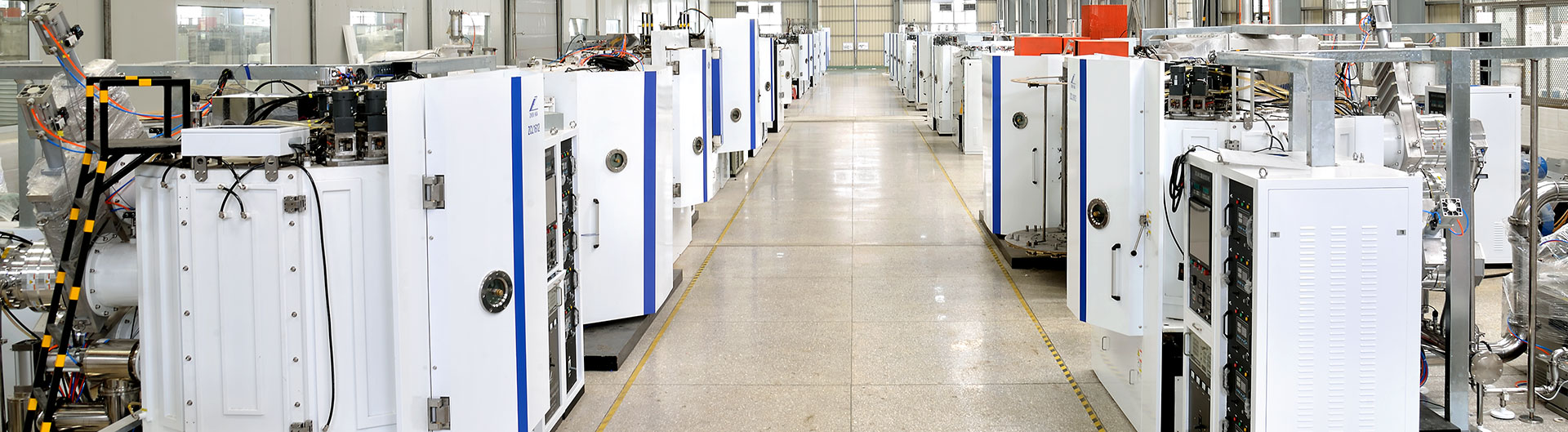
To address the uneven surface treatment that can occur on curved surfaces, grooves, deep cavities, and other complex areas of automotive plastic parts, Zhenhua Vacuum applies vacuum fluorination technology to modify the plastic surface as a whole. This enables relatively uniform surface treatment even on complex geometries, helping reduce treatment variations caused by differences in part shape and structure.
After fluorination modification, the wettability of the plastic surface is improved, allowing water-based paint to spread and adhere more effectively. It also helps enhance process consistency and coating stability in mass production. Compared with conventional pre-treatment methods that rely on primers or adhesion promoters, vacuum fluorination can reduce the dependence on certain primers, adhesion promoters, and associated coating and drying processes, thereby reducing material consumption and chemical usage and providing a more streamlined pre-treatment route for water-based coating of automotive plastic parts.
Equipment Advantages
1. Innovative Surface Modification Technology for Enhanced Water-Based Paint Adhesion
The technology improves the surface wettability of plastic substrates, enabling water-based paint to wet the surface more uniformly and achieve stronger adhesion. This helps address the weak interfacial bonding between water-based coatings and polymer substrates.
2. Comprehensive Performance Enhancement: From Adhesion to Multifunctional Surface Protection
The fluorinated surface provides enhanced barrier properties against environmental exposure and offers good chemical and environmental resistance, helping improve the long-term stability and service life of automotive interior plastic components.
3. Precise Process Control for Complex-Shaped Parts
With flexible and adjustable process parameters, the equipment can be customized according to the specific geometry and structural characteristics of complex-shaped workpieces, providing reliable process control and consistent surface treatment for high-quality production.
4. Wide Application Range to Meet Diverse Requirements
By providing customized surface-treatment solutions for different industries, vacuum fluorination technology can further expand the application potential of polymer materials and contribute to improvements in product quality and performance. Applications include the automotive, chemical, electronics, packaging, and fiber/film industries, among others.
As automotive plastic parts continue to evolve in terms of design, structural complexity, and surface appearance requirements, pre-treatment for water-based coating is no longer limited to simply improving adhesion. It must also address complex geometries, batch-to-batch consistency, and production stability.
Through comprehensive surface modification of plastic substrates, vacuum fluorination provides an alternative pre-treatment approach for complex automotive plastic parts featuring curved surfaces, grooves, deep cavities, and other intricate structures. While improving the wettability and adhesion performance of water-based coatings, it can also contribute to more consistent surface treatment in mass production.
According to different plastic materials, part geometries, and coating process requirements, Zhenhua Vacuum can provide corresponding vacuum fluorination equipment and process solutions, helping automotive plastic component manufacturers optimize their pre-treatment processes for water-based coating applications.
-This article was published by vacuum coating equipment manufacturer Zhenhua Vacuum
Post time: Sep-29-2026