

1. Why Is Drilling an Essential Process in PCB Manufacturing?
A Printed Circuit Board (PCB) is a fundamental component in electronic devices, providing both electrical interconnection and mechanical support for electronic components. It is often referred to as the “mother of electronic products.” From smartphones and computers to new energy vehicles and AI servers, virtually all sophisticated electronic devices rely on PCBs.
Based on the number of circuit layers, PCBs can be classified into single-sided, double-sided, and multilayer boards. Among these, multilayer PCBs are widely used in complex electronic devices. A key base material for manufacturing multilayer PCBs is the copper-clad laminate (CCL). It can be viewed as a “sandwich” structure consisting of copper foil and an insulating substrate, with copper foil laminated onto one or both sides of the insulating material. The copper foil provides electrical conductivity and signal transmission, while the insulating substrate provides mechanical support and electrical isolation, preventing short circuits between different circuits. Through a series of processes such as circuit fabrication and lamination, alternating layers of copper circuitry and insulating dielectric materials are ultimately formed into a multilayer circuit structure.

But once different circuit layers are separated by insulating materials, how can electrical connections be established between them? This is where a critical PCB manufacturing process—drilling—comes into play. During machining, micro-drills with diameters of 0.2 mm or smaller rotate at high speed to create micro-holes with specified dimensions in the PCB laminate. Subsequent processes such as hole-wall metallization then establish conductive pathways between the circuit layers that need to be interconnected.
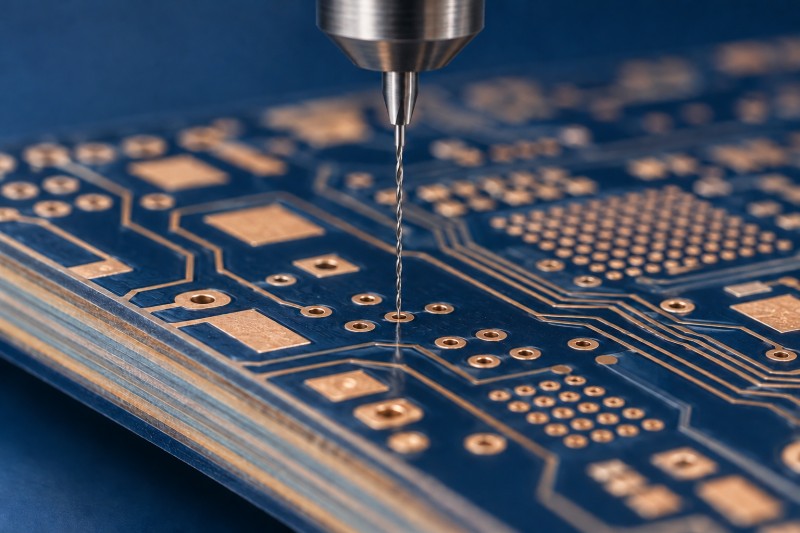
Drilling quality directly affects hole diameter accuracy, hole-wall quality, and the subsequent metallization process, while the material properties and structural characteristics of the laminate directly determine the difficulty of the drilling operation.
2. From FR-4 to M9: Why Do Micro-Drills Require Higher-Performance Coatings?
In conventional PCB manufacturing, FR-4 copper-clad laminates are widely used and are primarily composed of fiberglass cloth reinforced epoxy resin. For some conventional PCBs with relatively few circuit layers, drilling is comparatively less demanding. Uncoated cemented-carbide micro-drills, commonly referred to as “white drills,” or micro-drills with conventional hard coatings can generally meet the machining requirements.
As demand for AI computing power continues to grow rapidly, AI servers are placing increasingly stringent requirements on high-speed signal transmission performance, accelerating the adoption of high-performance copper-clad laminates such as M8 and M9. These advanced laminates improve signal transmission performance through optimized resin systems, reinforcement materials, and filler formulations. Depending on the required electrical properties, materials such as hydrocarbon resins, PPO-based resins, low-dielectric-constant fiberglass fabrics, and even quartz-fiber fabrics can be incorporated to meet the requirements of high-speed, low-loss signal transmission.
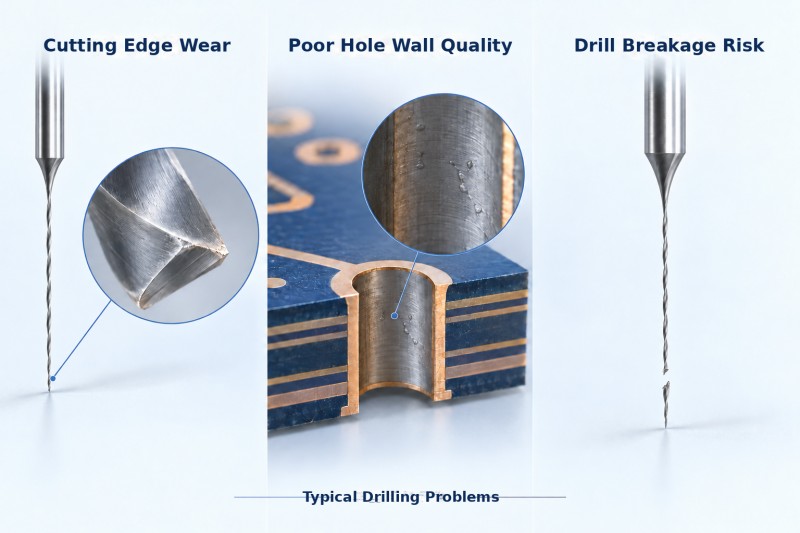
However, material upgrades also introduce new challenges for drilling. High-performance laminates may incorporate high-hardness fillers, which can increase material abrasiveness. At the same time, as PCB layer counts increase and the drilling aspect ratio becomes higher, the machining load on micro-drills also increases. This can result in accelerated cutting-edge wear, reduced tool life, deterioration of hole-wall quality, and a higher risk of drill breakage.
Under these more demanding machining conditions, conventional white drills and traditional hard coatings such as TiN, TiCN, and TiAlN have certain performance limitations. Coatings with higher hardness, stronger wear resistance, and lower coefficients of friction are therefore required. In addition, for micro-drills with diameters of only 0.2 mm or even smaller, macroparticles and localized coating defects can affect cutting-edge geometry and drilling stability. Therefore, coating surface quality is equally critical.
3. From High Hardness to High Coating Quality: How Does Zhenhua’s Micro-Drill Coating Equipment Overcome These Process Challenges?
To address micro-drill wear and coating defects associated with high-performance PCB laminates, Zhenhua Vacuum (vacuum coating equipment manufacturer) combines Ta-C coating technology with curved-duct magnetic filtration to improve both micro-drill wear resistance and coating surface quality.
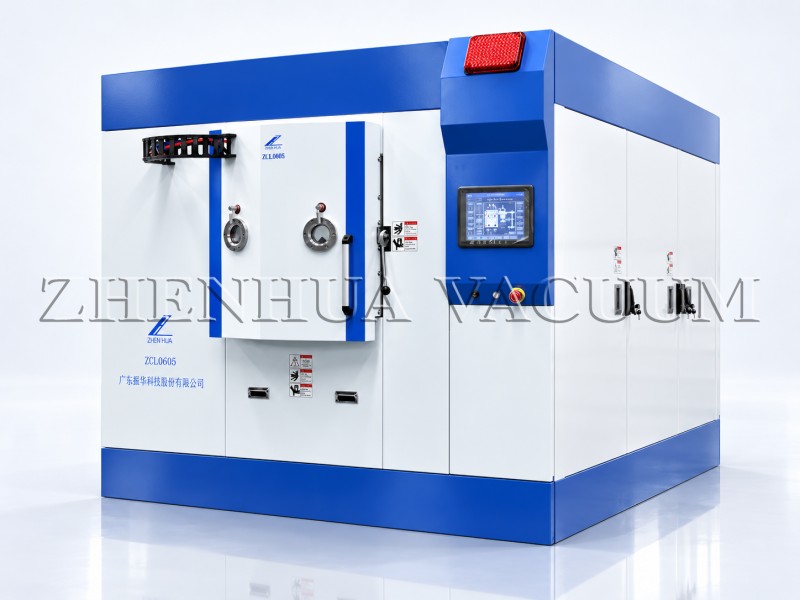
The equipment can deposit a Ta-C (tetrahedral amorphous carbon) coating with a hardness of approximately 63 GPa onto micro-drills. The coating combines high hardness, excellent wear resistance, and low friction characteristics, helping reduce frictional resistance during drilling, slow cutting-edge wear, and extend micro-drill service life.
To address the macroparticles generated during cathodic arc deposition, Zhenhua’s independently developed curved-duct magnetic filtration system uses a magnetic field to guide charged particles through a curved passage. Due to their inertia, some macroparticles collide with the inner wall of the duct and are captured, thereby reducing the number of macroparticles entering the coating zone. This helps produce a smoother and more uniform coating surface while reducing the impact of coating defects on cutting-edge accuracy and drilling stability.
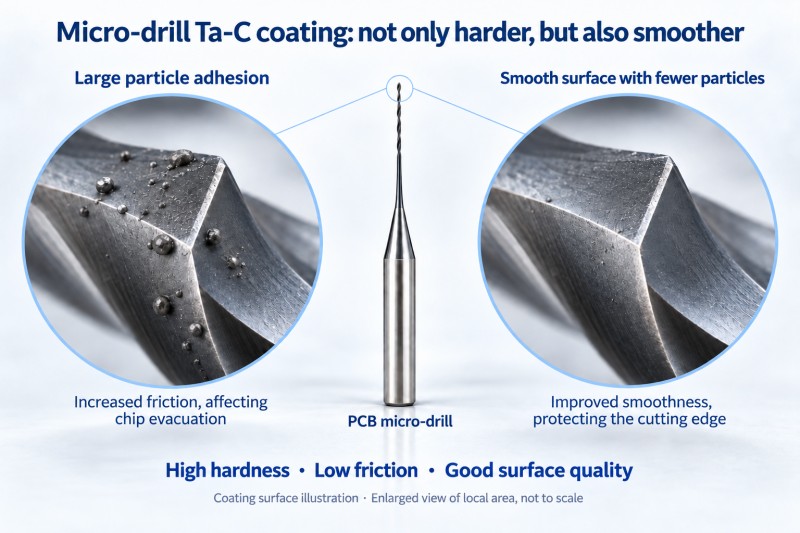
By combining high-hardness Ta-C coatings with curved-duct magnetic filtration technology, the equipment provides an advanced coating solution for micro-drills used to machine high-performance PCB laminates such as M8 and M9. The relevant equipment has already been delivered to leading PCB cutting-tool manufacturers and deployed in customers’ production facilities, with technical support available throughout equipment selection, coating process development and commissioning, and mass-production implementation.
4. Conclusion
As the adoption of high-performance PCB laminates such as M8 and M9 continues to expand, micro-drills are facing increasingly stringent requirements for coating performance and coating quality. Zhenhua Vacuum will continue to focus on the key requirements of micro-drill wear resistance, coating quality, and mass-production stability, continuously optimizing vacuum coating equipment and process solutions to provide PCB cutting-tool manufacturers with more efficient and reliable coating technology support.
— This article is published by Zhenhua Vacuum, a manufacturer of PCB micro-drill coating equipment.
Post time: Oct-21-2026