
No.1 Technological Evolution of Automotive Lighting Applications
Traditional automotive lighting systems primarily serve illumination and signaling functions, with their core performance requirements focused on luminous intensity, illumination distance, and visibility. With the rapid development of automotive styling and intelligent cockpit technologies, however, the role of lighting systems has changed significantly. Automotive lighting is evolving from a purely functional component into an integrated platform that conveys vehicle design language, reinforces brand identity, creates an in-cabin atmosphere, and enables human–machine interaction.
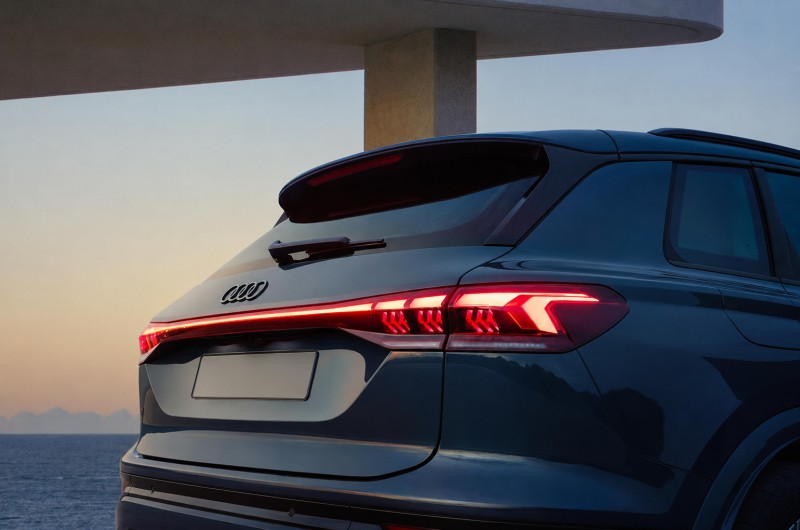
Current design trends among leading automakers demonstrate that lighting systems are being given increasingly sophisticated visual and interactive functions. For example, the Audi Q6 e-tron is equipped with second-generation digital OLED taillights, which use finely divided light-emitting segments to create more dynamic display effects. The new Mercedes-Benz CLA features an illuminated three-pointed-star grille incorporating 142 individually illuminated star elements, integrating brand identity, front-end styling, and lighting effects into a unified design.
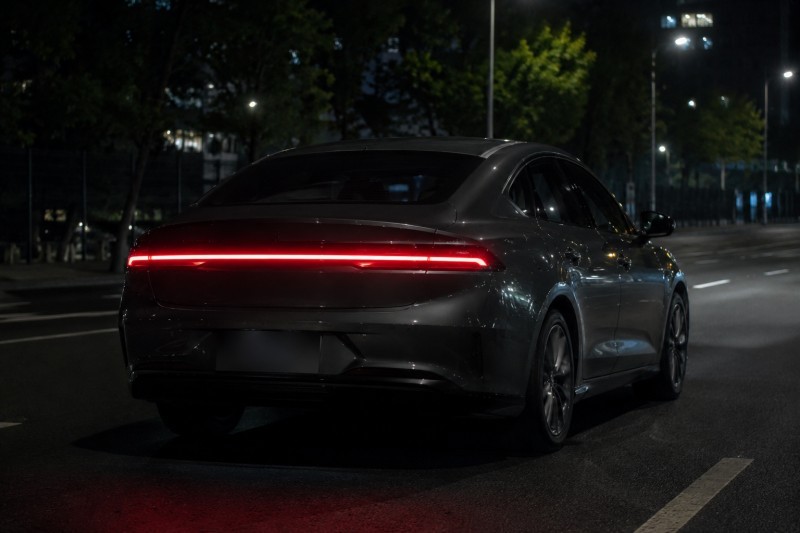
These technological advances in automotive lighting have placed higher demands on the surface treatment processes used for related components. For illuminated emblems, full-width taillights, ambient lighting trim, and similar products, surface treatment is no longer limited to achieving a particular color or texture. It must also work in coordination with the overall vehicle design, optical performance, and long-term reliability requirements. As lighting effects become more refined, the required precision of thin-film deposition and coating control also increases.
No.2 Core Coating Challenges Created by the Upgrading of Automotive Lighting
1. Coordinated Control of Decorative Appearance, Light Transmission, and Coating Functionality
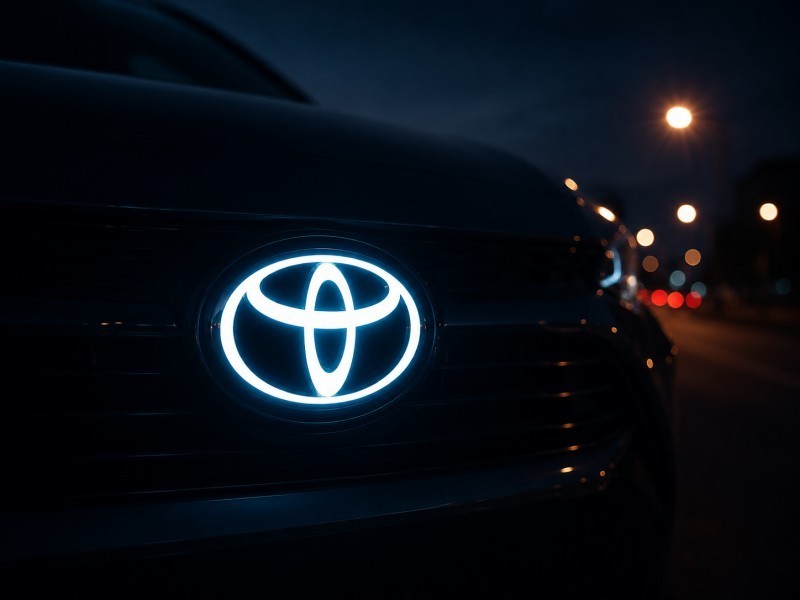
In applications such as illuminated emblems, ambient lighting trim, and full-width taillights, components must satisfy both decorative and optical requirements. When the light source is switched off, the component may need to present a metallic appearance, a dark decorative finish, or a seamless integrated surface. When illuminated, it must allow light to pass through uniformly in accordance with the intended optical design.
Depending on the functional requirements of the product, commonly used coating systems include semi-transparent coatings, non-conductive vacuum metallization coatings, metallic coatings, and protective topcoats. Semi-transparent coatings are mainly used to balance light transmittance and reflectance. Non-conductive vacuum metallization coatings create a metallic appearance on plastic substrates while minimizing the effects caused by continuous electrical conductivity. Metallic coatings can enhance reflectivity, opacity, and decorative appearance, while protective topcoats improve wear resistance, weatherability, and long-term coating stability.
Although these effects may appear to be primarily related to exterior design, they require highly precise control of coating parameters. If the coating is too thick, light transmittance may be reduced, preventing sufficient light from passing through and resulting in inadequate brightness or failure to achieve the intended illuminated effect. If the coating is too thin, the required metallic or decorative appearance may not be sufficiently pronounced. Non-uniform coating thickness can also lead to inconsistent brightness, visible color differences, localized mottling, and uneven visual effects.
Automotive lighting component coating therefore requires more than selecting the appropriate coating material or film structure. It also requires stable control of transmittance, reflectance, color consistency, and coating thickness uniformity. For premium automotive lighting components, these details directly influence the perceived quality and overall appearance of the vehicle.
2. Complex Geometries Increase the Difficulty of Controlling Coating Thickness Uniformity
Illuminated emblems, full-width taillights, ambient lighting trim, and other automotive lighting components often incorporate curved surfaces, arcs, corners, recessed areas, and irregular geometries rather than simple flat structures. Compared with planar components, these complex geometries are more sensitive to fixture design, loading method, component orientation, and deposition direction during the coating process, which can result in variations in coating coverage across different areas.
Once the coating thickness distribution becomes non-uniform, the product may exhibit inconsistent brightness, visible color differences, localized mottling, unstable edge effects, or uneven decorative appearance.
No.3 Higher Requirements for Mass-Production Consistency and Long-Term Reliability
The performance of an automotive lighting coating process cannot be evaluated solely on the basis of prototype samples. Its stability under mass-production conditions must also be considered. Achieving the required metallic appearance, dark finish, or semi-transparent optical effect in a small trial batch does not necessarily mean that the process is sufficiently mature for industrial production. During volume manufacturing, consistent color, light transmittance, coating adhesion, and surface appearance must be maintained across different production batches.
Exterior lighting components and illuminated emblems are continuously exposed to temperature cycling, ultraviolet radiation, high-humidity environments, car-wash chemicals, dust contamination, and minor abrasion. Although interior ambient lighting trim is used under relatively moderate environmental conditions, it must still maintain long-term appearance stability and avoid discoloration, coating delamination, mottling, or deterioration of surface texture.
The evaluation of a coating process must therefore consider not only whether the intended visual and optical effects can be achieved, but also whether the process can support stable mass production and pass the required reliability validation. These factors are critical in determining whether a coating process can be formally introduced into the automotive supply chain.
No.4 Zhenhua Vacuum Coating Solutions for Automotive Lighting Components
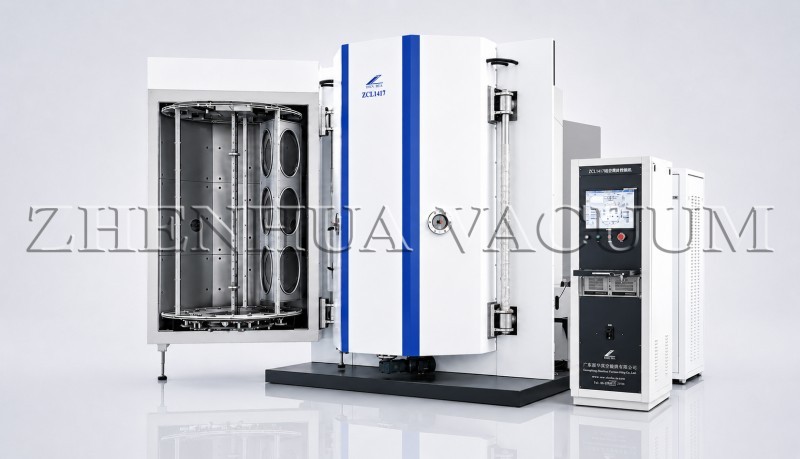
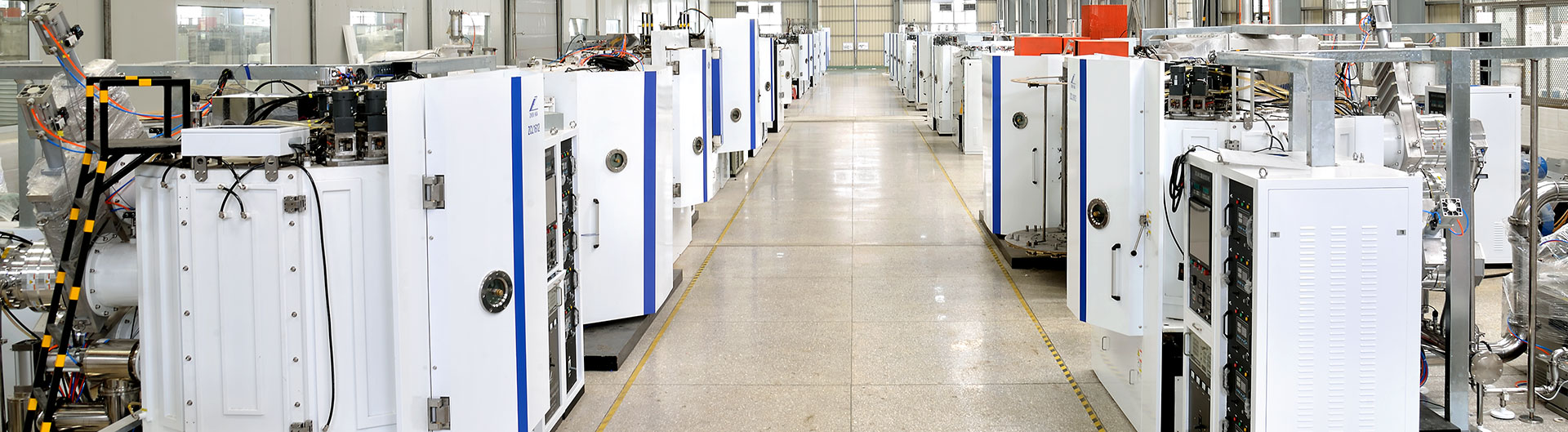
To meet the requirements of automotive lighting components for light transmission, reflectivity, decorative appearance, and long-term stability, Zhenhua Vacuum has developed the ZCL1417 coating system specifically for automotive applications. The equipment can be used for headlamp reflectors, interior ambient lighting components, illuminated emblems, radar emblems, and automotive interior trim parts.
The system integrates multiple deposition technologies, including DC magnetron sputtering, medium-frequency magnetron sputtering, chemical vapor deposition, and resistance evaporation. Different technologies can be combined according to specific product and process requirements, enabling flexible process switching for components with complex structures. The equipment supports the deposition of metallic coatings, reactive coatings, semi-transparent optical coatings, and other functional film systems.
For illuminated emblems, ambient lighting trim, lamp reflectors, and similar products, decorative coatings and protective topcoats can be deposited sequentially within a single production cycle. This reduces the contamination risks associated with secondary processing and helps improve coating thickness uniformity, appearance consistency, and batch-to-batch stability.
No.5 Conclusion
As automotive lighting systems evolve from basic illumination toward styling expression, brand recognition, and intelligent interaction, the surface treatment requirements for related components continue to increase. For illuminated emblems, full-width taillights, ambient lighting trim, and similar products, the coating process not only determines the decorative appearance but also directly affects light transmission, coating consistency, mass-production stability, and long-term reliability.
Future developments in automotive lighting components will increasingly depend on high-precision, multifunctional, and mass-production-oriented coating technologies. Zhenhua Vacuum will continue to focus on the automotive industry’s integrated requirements for optical performance, decorative appearance, and reliability validation, providing stable and efficient vacuum coating equipment and process solutions to support the high-quality upgrading of automotive lighting, interior trim, and exterior components.
-This article was published by vacuum coating equipment manufacturer Zhenhua Vacuum
Post time: Jul-09-2026