
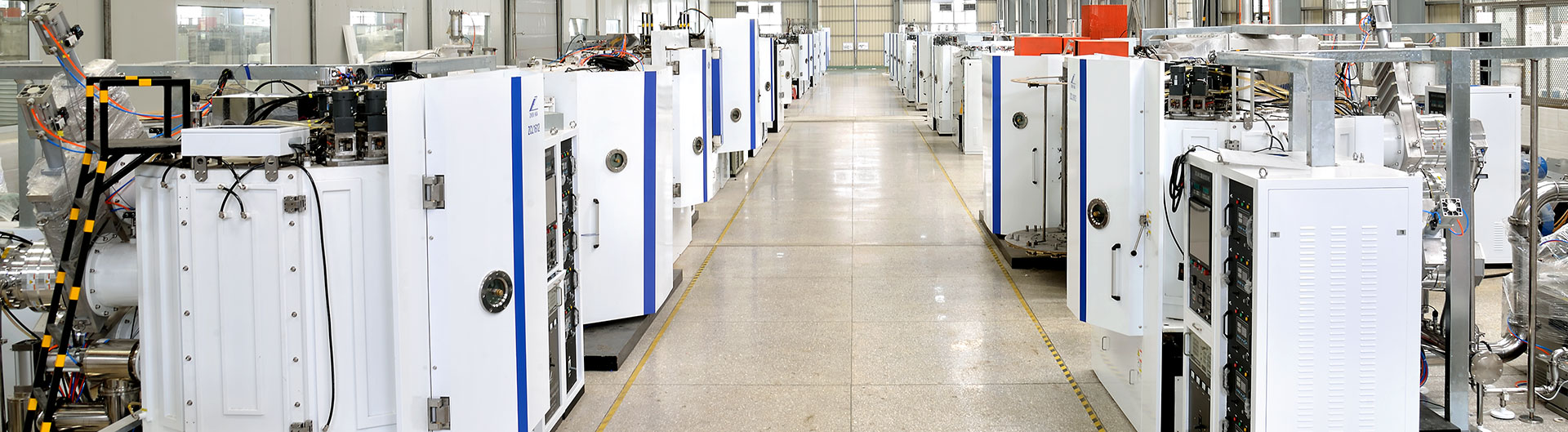
As global manufacturing accelerates its shift toward low-carbon, eco-friendly, and high-efficiency production, Vacuum Coating Technology has emerged as a key solution for green surface finishing. Characterized by high material utilization, zero wastewater discharge, and low energy consumption, vacuum coating stands out as a sustainable alternative to traditional wet processes such as painting and electroplating. It not only fulfills both functional and decorative requirements but also delivers significant environmental benefits.
No.1 Intrinsically Clean Process
Vacuum coating refers to Physical Vapor Deposition (PVD) or Chemical Vapor Deposition (CVD) processes, where metal or functional materials are deposited onto a substrate in the form of atoms or molecules under high vacuum conditions, forming a thin-film layer. The process is inherently clean due to the absence of liquid chemicals, electrolytes, and thermal curing steps. Key environmental attributes include:
No wastewater discharge: Unlike electroplating or spray painting, vacuum coating does not involve acid/alkaline baths, electrolytes, or water rinsing, thus avoiding the discharge of heavy metals, COD, and surfactants.
No VOC emissions: Since coating materials are transferred via thermal evaporation, sputtering, or ion bombardment without organic solvents, no Volatile Organic Compounds (VOCs) are released, eliminating a major source of air pollution in traditional coating lines.
Minimal solid waste: The only solid residues generated are minor amounts of reclaimable target material and dry cleaning dust, with no generation of sludge or overspray waste.
No.2 High Material Utilization, Low Resource Waste
In mainstream PVD techniques such as Magnetron Sputtering and Thermal Evaporation, materials are deposited in gaseous form, achieving deposition efficiencies of 30% to 70%—significantly higher than the 10% to 30% range typical of spray coating. Further optimization of target geometry, power density, and deposition path can enhance material efficiency and reduce raw material losses.
For precious and rare materials (e.g., Au, Pt, ITO, Cr), vacuum coating allows for precise deposition and effective material recycling, offering both economic and environmental value in electronics, optics, and semiconductor industries.
No.3 Sustainable Alternative to Electroplating and Painting
Vacuum coating now enables a wide range of decorative finishes, including metallic, ceramic-like, glossy, or matte effects. It has become a viable replacement for environmentally hazardous surface treatments involving hexavalent chromium, nickel, and other toxic substances. Applicable on plastic, ceramic, and metal substrates, it supports safer and greener decorative coatings.
For example, PVD chrome replacement is already an industry trend in Europe, the U.S., and Japan. Meanwhile, high-reflectivity vacuum-deposited coatings that eliminate the need for spray painting have been adopted in automotive lighting and interior components—realizing a shift from “non-pollution” to “pollution replacement.”
No.4 Aligns with Low-Carbon Manufacturing and Carbon Footprint Reduction
With increasing emphasis on carbon neutrality and lifecycle emissions, vacuum coating equipment is being designed for energy efficiency—featuring controlled heating, zoned vacuum pumping, and energy recovery systems. Ongoing advancements in plasma energy utilization and power supply optimization further support carbon footprint reduction.
Moreover, certain vacuum-deposited films contribute directly to downstream energy savings. Applications such as Low-E glass, optical reflectors, and infrared heat-insulating coatings help improve energy efficiency across the value chain, reinforcing their role in sustainable manufacturing.
Vacuum coating is more than just a high-performance surface engineering solution—it is a cornerstone technology in the future of green manufacturing. Its attributes of zero emissions, high efficiency, and process substitution capability give it a long-term ecological edge in an era of tightening environmental regulations.
—This article was published by vacuum coating equipment manufacturer Zhenhua Vacuum
Post time: Jul-23-2025