
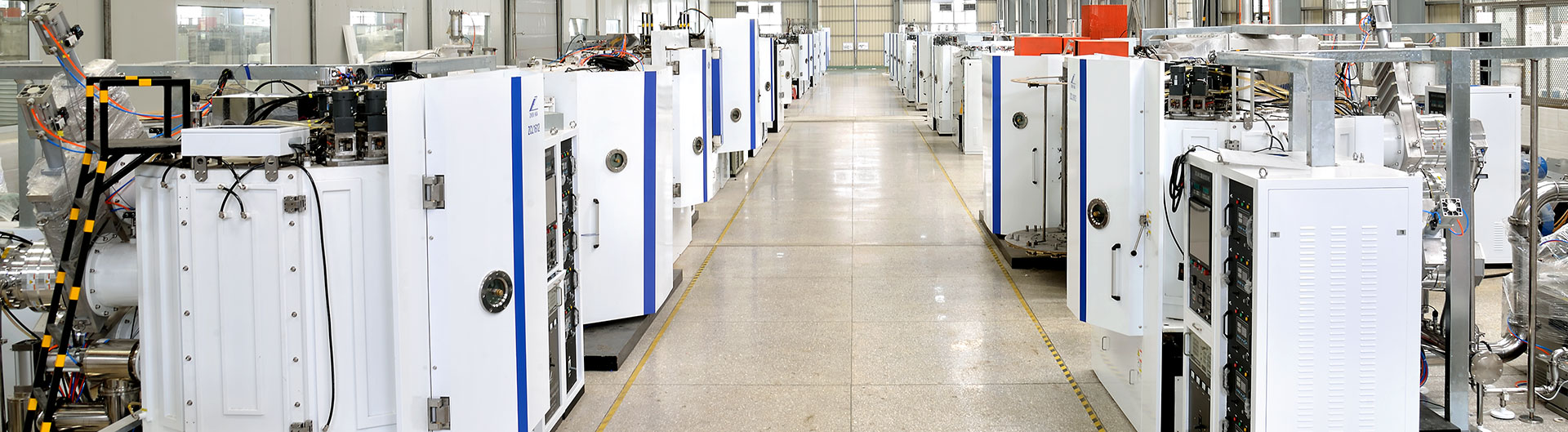
In modern surface engineering, Physical Vapor Deposition (PVD) has emerged as a core vacuum coating technology due to its excellent film performance and environmentally friendly characteristics. This article provides an in-depth analysis of the principles, classifications, and typical applications of PVD technology, offering technical insights for professionals in the field.
No.1 Basic Principles of PVD Technology
PVD is a process carried out under vacuum conditions (typically ≤10⁻³ Pa), in which a coating material is physically vaporized and then condensed onto the substrate surface to form a solid thin film. This technique is characterized by:
Relatively low deposition temperature (generally <500°C)
High film purity and controllable composition
Environmentally friendly (no wastewater discharge)
Nanometer-level precision control
No.2 Classifications of PVD Equipment Processes
1. Vacuum Evaporation Coating
Vacuum evaporation involves heating the coating material until it reaches its saturated vapor pressure and evaporates. Common types include:
Resistive Heating Evaporation
Uses refractory metals such as tungsten or molybdenum as heating elements. Suitable for low melting point materials like aluminum (Al) and silver (Ag).
Electron Beam Evaporation (EB-PVD)
Utilizes an electron gun (10–30 kV) to bombard the target material, generating localized temperatures over 3000°C. Ideal for high-melting-point oxides.
Molecular Beam Epitaxy (MBE)
A highly precise technique performed under ultra-high vacuum (≤10⁻⁸ Pa), allowing atomic-level control for epitaxial film growth.
2. Sputtering Deposition
Sputtering involves high-energy particles bombarding a target material, ejecting atoms that deposit onto the substrate. Key sputtering types include:
DC Sputtering (Direct Current)
Basic sputtering method; target must be electrically conductive.
RF Sputtering (Radio Frequency)
Operates at 13.56 MHz, allowing the sputtering of insulating materials.
Magnetron Sputtering
Balanced Type: Magnetic field strength of 100–300 Gauss across the target surface
Unbalanced Type: Enhanced plasma diffusion for better deposition
Mid-Frequency Twin Cathode: Solves the “target poisoning” issue in reactive sputtering
High Power Impulse Magnetron Sputtering (HIPIMS): Ionization rates >90%, producing ultra-dense, non-columnar films
No.3 Typical Applications of PVD Technology
Tool Coatings
Hard coatings such as TiN, TiAlN (hardness >3000 HV)
Widely used for cutting tools and mold surface enhancement
Decorative Coatings
Gold-like finishes using ZrN, TiZrN
Applied to mobile phone frames, bathroom fixtures, and consumer goods
Functional Thin Films
ITO (Indium Tin Oxide) transparent conductive films with sheet resistance <10 Ω/□
Optical anti-reflective coatings with visible light transmittance >99%
Semiconductor Packaging
Wafer-level metallization (Al, Cu interconnects)
Barrier layer deposition using TaN, TiN for diffusion resistance
-This article is released by vacuum coating machine manufacturer Zhenhua Vacuum.
Post time: Jun-18-2025