
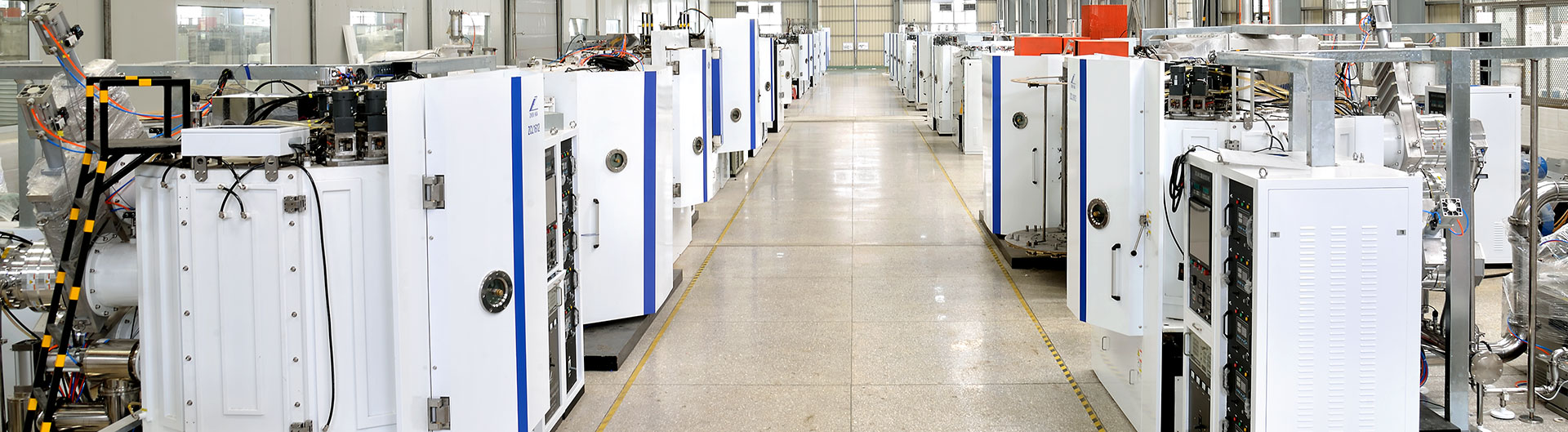
As medical devices evolve toward higher precision, minimally invasive procedures, and enhanced durability, Vacuum Coating Technology has increasingly become an essential surface modification process. Through methods such as Physical Vapor Deposition (PVD), Magnetron Sputtering, and Ion Plating, medical devices can achieve not only excellent biocompatibility, but also antibacterial performance, wear resistance, and aesthetic qualities.
I. Principle of Vacuum Coating
Vacuum coating utilizes a high-vacuum environment and energy sources (plasma, electron beam, or arc discharge) to evaporate or sputter coating materials into energetic particles, which then condense on the surface of medical device substrates to form functional thin films. Compared with traditional electroplating or spraying, its advantages include:
Dense Microstructure for improved durability
Strong Adhesion between film and substrate
Eco-friendly Process with no chemical wastewater, compliant with green manufacturing standards
II. Applications of Vacuum Coating in Medical Devices
1. Surgical Instruments
Common Coatings: TiN, ZrN, DLC (Diamond-Like Carbon)
Function: Enhances surface hardness and wear resistance, reduces friction coefficient, and extends the service life of scissors, scalpels, forceps, and other instruments.
2. Implantable Devices
Common Coatings: Ti, TiO₂, HA (Hydroxyapatite)
Function: Ti and TiO₂ coatings provide superior biocompatibility and promote osseointegration. HA coatings improve surface activity, facilitating cell adhesion and tissue bonding.
3. Cardiovascular Devices
Examples: Stents, artificial heart valves
Function: DLC or TiN coatings reduce friction in blood-contact environments, lower the risk of thrombosis (anti-thrombogenic properties), and extend device lifespan.
4. Dental Instruments
Applications: TiN-coated dental drills, DLC-coated probes
Function: Improves corrosion resistance and surface hardness, ensuring higher accuracy and durability in clinical use.
5. Antibacterial & Protective Coatings
Materials: Ag, Cu, ZnO nanocoatings
Mechanism: Controlled ion release or photocatalytic effects suppress bacterial growth, lowering the risk of post-operative infection.
III. Process Advantages and Industrial Value
Controlled Film Thickness: Precisely adjustable from a few nanometers to several micrometers.
Multifunctional Composite Coatings: Integrates wear resistance, antibacterial properties, and biocompatibility in one film stack.
Mass Production Capability: Suitable for scalable manufacturing in the medical device industry.
IV. Future Trends
With the advancement of miniaturized and smart medical devices, vacuum coating will further integrate nanotechnology and bio-functional coatings, such as:
Nano-silver (Ag) antibacterial coatings for enhanced infection control
Nano-TiO₂ photocatalytic coatings for long-term antimicrobial performance
Functionalized coatings for improved drug delivery efficiency
Conclusion
Vacuum coating is not just a method to improve the appearance and durability of medical devices; it is a key technology for enhancing safety and functionality. From surgical instruments to implants, from stents to dental tools, vacuum coating has already become an indispensable surface engineering solution in the medical industry.
—This article was published by vacuum coating equipment manufacturer Zhenhua Vacuum
Post time: Sep-16-2025