
Introduction: From Throughput-Driven to Yield-Driven — PCB Drilling Enters a New Standard Cycle
In the conventional stage of PCB fabrication, the competitive logic of the drilling process was throughput-oriented—higher spindle speed, lower consumable cost, and larger production scale translated directly into cost advantages. However, with the rapid growth of AI servers, advanced HDI (High-Density Interconnect), and IC substrates, PCB structures are becoming thicker, more multilayered, and feature smaller hole diameters. The traditional “speed-first” paradigm is being fundamentally redefined—high-speed drilling no longer guarantees precision or process stability.

The expansion of market scale further amplifies the urgency of this transition. According to industry data, China’s PCB market reached RMB 290.1 billion in 2024 and is projected to grow to RMB 307.5 billion in 2025 and RMB 325.9 billion in 2026, with AI servers and high-speed networking as key growth drivers.
This signals a structural shift from volume manufacturing to high-precision manufacturing. The core competitiveness is no longer how fast holes can be drilled, but who can maintain extreme consistency and high line yield in sub-0.1 mm microvia drilling.
1. Microvia Drilling: Pushing Drill Bit Performance to the Limit
As via diameters shrink, drill bits become increasingly finer. Meanwhile, harder materials and higher layer counts impose greater challenges in terms of tool wear, thermal load, chip evacuation, and drill breakage risk.
Under such extreme conditions, the hard coating on micro drills becomes the critical barrier determining tool life and machining quality. Even minor coating defects can escalate into burr formation, hole deviation, edge chipping, drill breakage, or even full panel scrap.

For high-value applications such as AI server PCBs and advanced HDI boards, drilling yield directly impacts overall line throughput and delivery stability. In this context, the performance of hard coatings on micro drills becomes a decisive factor.
2. Rising Technical Barriers for Micro Drill Coatings: High Cost of Imported Equipment
High-end micro drill coatings impose stringent requirements on vacuum systems, cathodic arc source control, plasma stability, and coating uniformity. For a long time, this segment has been dominated by international equipment suppliers.
However, the hidden costs of imported systems are substantial:
Initial capital investment (including tariffs) often reaches several million RMB
Long lead times for overseas service engineers
High cost and long delivery cycles for spare parts
Limited flexibility for process customization on specialized multilayer materials
More critically, reliance on imported equipment restricts process autonomy, making it difficult for manufacturers to respond quickly to evolving application demands.
For PCB fabricators and cutting tool manufacturers operating under tight margins, high-end capability cannot rely solely on expensive imported equipment. What is required is a solution that ensures stable coating performance with controllable cost.
3. Domestic Substitution: From Affordability to Process Stability
Facing the cost and service barriers of imported systems, procurement strategies in the PCB tooling sector are shifting—from “import-only” dependence to a more pragmatic standard: qualified performance, cost efficiency, and fast service response.
At its core, this shift represents a reclaiming of process ownership—achieving high-quality coatings while shortening the supply chain and improving responsiveness.
This trend is already validated by industry leaders. Leading PCB micro drill manufacturers such as Jinzhou Precision Technology and Dingtai High-Tech, which together account for approximately 60% of the global PCB drill bit market, have begun large-scale adoption of domestic hard coating equipment as core production tools, rather than treating them as substitutes.
This marks a transition of domestic coating equipment from technology validation to mature, stable mass production deployment.
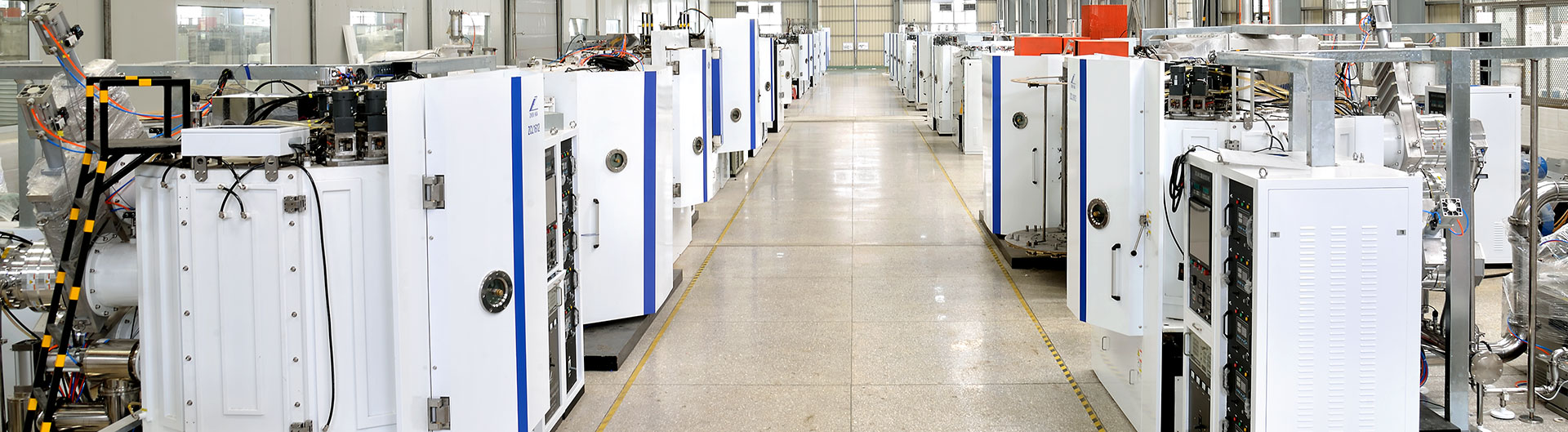
Case Study: Zhenhua Vacuum Micro Drill Coating System
As a manufacturer with over 30 years of experience in vacuum coating technology, Zhenhua Vacuum has developed micro drill coating equipment that has been batch-validated by leading customers.
The system integrates filtered cathodic arc (FCA) technology with curved duct magnetic filtration, effectively eliminating macroparticles (droplets) and protecting the cutting edge morphology of ultra-fine drills (down to 0.075 mm diameter). This enables:
High-density, defect-free coating microstructure
Strong coating adhesion and uniformity
Stable batch-to-batch process consistency
Production feedback indicates that Zhenhua’s system not only significantly reduces overall operational cost, but also provides localized service with a 48-hour response time, compressing maintenance and debugging cycles from weeks to days.

Industry Impact: From High-Cost Option to Standard Configuration
For PCB manufacturers, this evolution means that high-performance hard coatings are no longer a premium option but a standard process capability.
Improved drill bit lifetime directly translates into: reduced tool change frequency; lower drill breakage rate; higher overall line yield and process stability
The maturation of domestic coating equipment not only lowers the entry barrier for high-end manufacturing but also provides a solid process foundation for China’s PCB industry to advance toward AI servers, advanced HDI, and other high-precision applications.
Conclusion
In the context of PCB industry upgrading, adopting high-performance domestic hard coating equipment is not merely a cost decision—it is a strategic move to enhance supply chain resilience and process autonomy.
Looking ahead, applications such as AI servers, advanced HDI, high-speed communication, and advanced packaging will continue to drive PCBs toward higher density and reliability.
While high-end hard coating equipment was once heavily reliant on imports, Zhenhua Vacuum now offers internationally competitive coating quality, optimized cost structures, and responsive localized service, providing a reliable solution for next-generation PCB micro drilling applications.
-This article was published by vacuum coating equipment manufacturer Zhenhua Vacuum
Post time: Apr-28-2026