
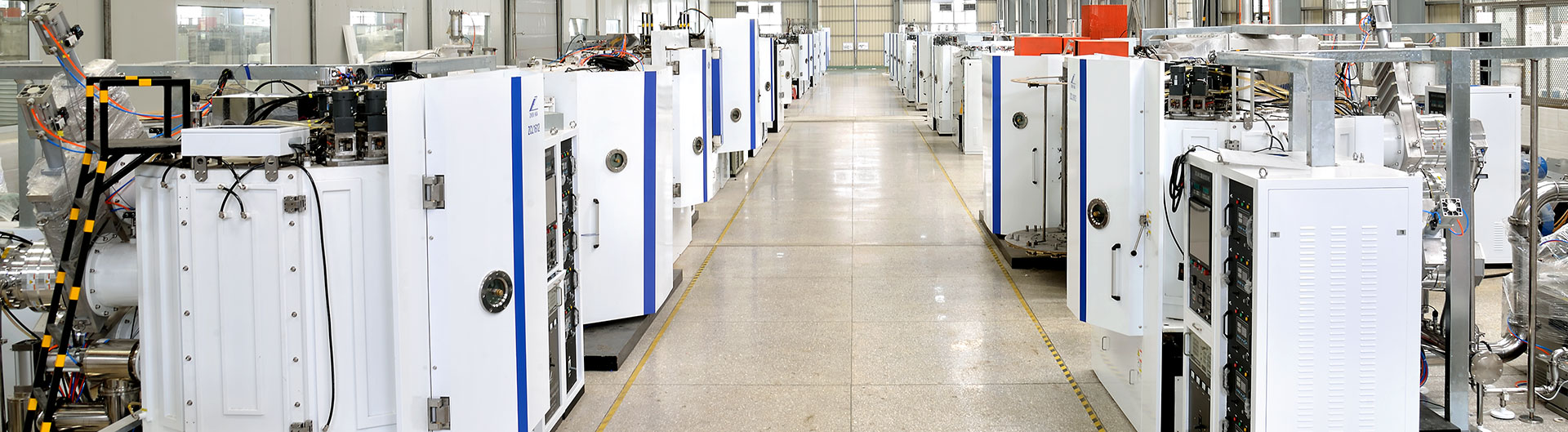
The Critical Role of Vacuum Thin-Film Coating in Extreme Space Environments
In aerospace engineering, material performance directly determines the service life and mission reliability of spacecraft. Operating under extreme conditions—such as high vacuum, severe thermal cycling, intense ultraviolet radiation, atomic oxygen erosion, and high-velocity particle impacts—conventional bulk materials often struggle to balance lightweight design with long-term reliability. Vacuum coating technologies, as a core surface engineering solution, have become a key enabler for material upgrades in modern spacecraft.
1. Stringent Surface Requirements in Space Applications
During on-orbit operation, spacecraft surfaces are continuously exposed to complex space environments, imposing multiple performance requirements on materials, including:
Excellent stability under extreme thermal cycling
Long-term resistance to ultraviolet radiation and atomic oxygen
Low outgassing characteristics and high vacuum compatibility
High mechanical strength and wear resistance while maintaining lightweight structures
A single substrate material is rarely able to meet all these requirements simultaneously. By introducing functional thin films onto the substrate surface, targeted performance enhancement can be achieved without altering the primary structural design.
2. Core Advantages of Vacuum Coating Technologies
Vacuum coating processes deposit metallic, ceramic, or composite materials onto substrates under high-vacuum or controlled atmospheres, forming functional thin films with precisely controlled thickness, dense microstructure, and tunable properties. Their key advantages in aerospace applications include:
High-purity and high-density film structures
The vacuum environment minimizes contamination, significantly improving film density and stability.
Strong film–substrate adhesion
Physical or chemical deposition mechanisms ensure robust bonding, enabling coatings to withstand harsh service conditions.
Precisely engineered functional properties
Through multilayer, graded, or composite coating designs, optical, electrical, thermal, and mechanical properties can be accurately tailored.
3. Representative Coating Processes and Aerospace Applications
Several vacuum coating technologies have been widely adopted in spacecraft manufacturing and critical component protection:
PVD (Physical Vapor Deposition)
Commonly used to produce wear-resistant, corrosion-resistant, and low-friction coatings such as TiN, CrN, and DLC for mechanical components, bearings, and moving assemblies.
CVD (Chemical Vapor Deposition)
Suitable for achieving highly uniform coatings on complex geometries, including high-temperature and protective films such as SiC, SiO₂, and Al₂O₃.
Optical Functional Coatings
Multilayer interference coatings are employed to realize thermal control surfaces, reflective films, and radiation-resistant optical coatings for spacecraft exteriors and optical systems.
4. From Material Protection to System-Level Performance Enhancement
The value of vacuum coatings extends beyond surface protection, contributing to overall spacecraft system performance:
Extended on-orbit service life
Reduced material degradation and performance loss
Improved reliability and safety margins of critical components
Enabling the engineering application of advanced lightweight substrates
As space missions evolve toward longer durations and more demanding environments, vacuum coating technologies are transitioning from auxiliary processes to integral elements in spacecraft material design.
5. Conclusion
As aerospace engineering advances into an era of deep-space exploration and heightened reliability requirements, vacuum coating technologies provide an efficient, controllable, and sustainable pathway for upgrading spacecraft materials. By integrating materials science with advanced surface engineering, vacuum thin-film technologies are delivering robust performance support for spacecraft operating in extreme environments.
–This article was published by vacuum coating equipment manufacturer Zhenhua Vacuum
Post time: Dec-05-2025